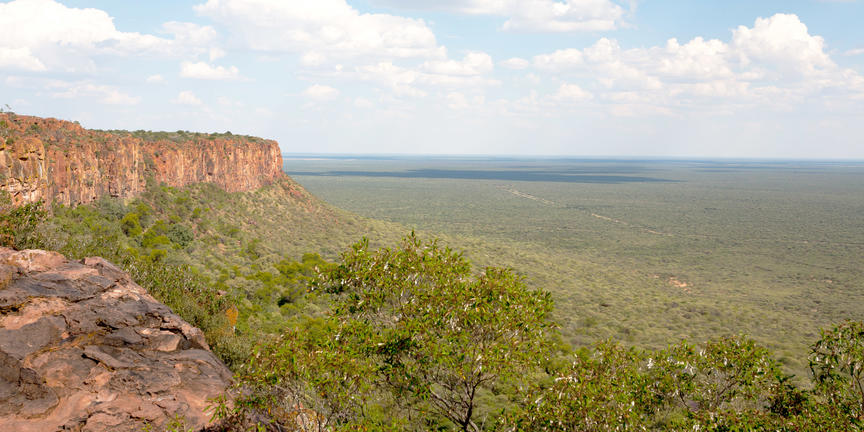
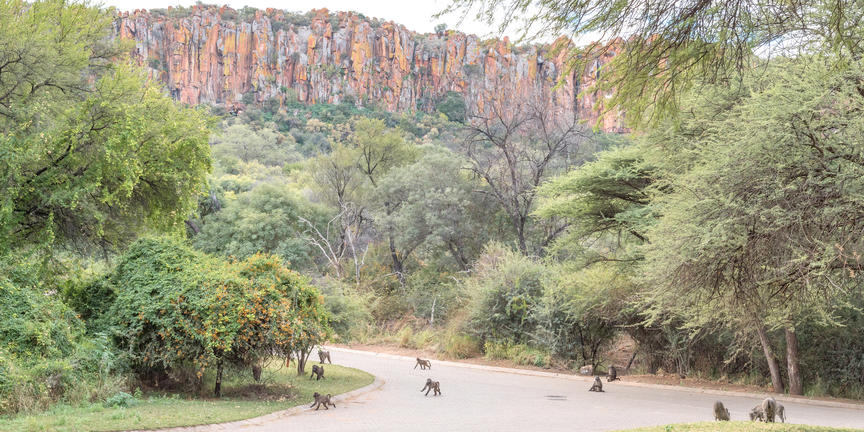
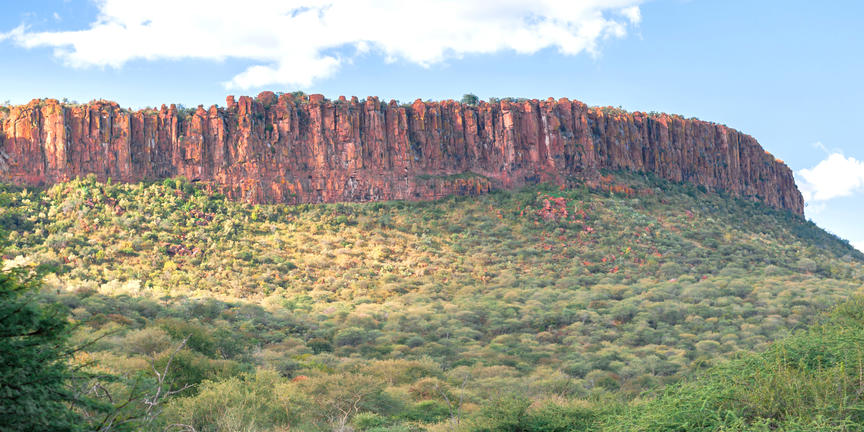
The Waterberg Plateau and 41,000 hectares of surrounding land was declared a Nature Reserve in 1972. The striking sight of Waterberg Plateau's brick-red sandstone crowned with lush vegetation has supported a wide diversity of flora and fauna for thousands of years. Rising to 420m in places and enveloped by Namibian savannah, the untouched fortifications of this unmistakable feature have provided nature with the perfect wildlife sanctuary. It lies between 1,650 and 1,700 m above sea level and is an erosion relic of a sandstone casing which covered large parts of Namibia millions of years ago. The sandy soils of the plateau have a low water retention capacity, and consequently rainwater flows down seams which have formed in the Etjo sandstone. When water reaches the impermeable mudstone band of Omingonde Formation, it is forced to the surface at the base of the cliffs to emerge as springs.
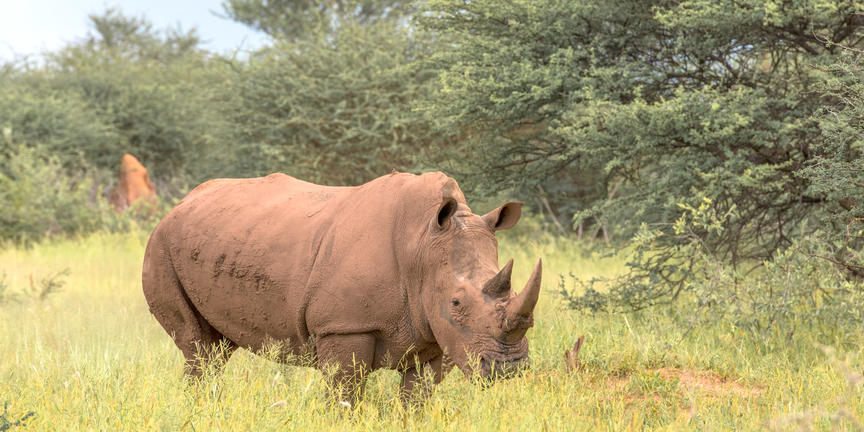
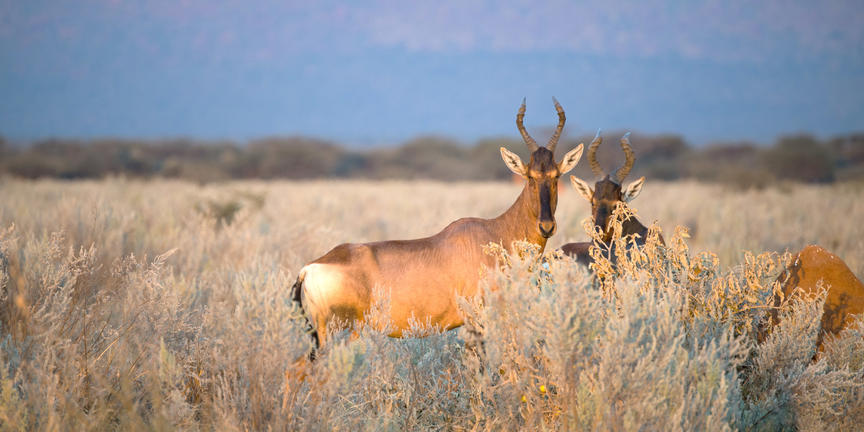
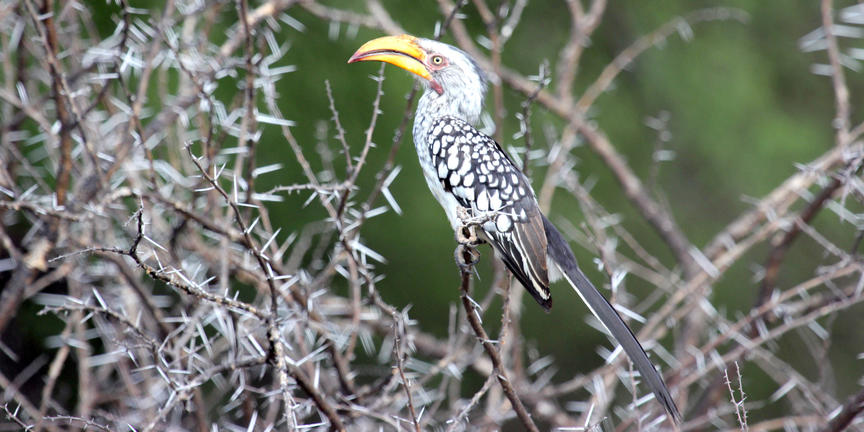
The table land is largely inaccessible, enabling several of Namibia's endangered species to be relocated here to protect them from predators and illegal hunting. The reintroduction programme was so successful that surplus species are released from Waterberg to supply other Namibian parks with rare animals. The Park has over 200 different species of bird and some rare species of small antelope on the lower hills of the mountain.
The first human inhabitants were the San people, who left rock engravings believed to be several thousand years old. A small tribe of the San were still living their traditional lifestyle on the plateau until the late 1960s. The site is also home to one of the major turning points in Namibia's History.
Important information:
- The gate to the camp is open from sunrise to sunset.
- Park entrance fees (not included in the paid-up reservations) must be paid at the reception.
N$ 280.00 per adult
N$ 180.00 per child 8-17 years
Children younger than 8, free of charge.
- Day visitors have to leave the Park before sunset.
- Breakfast is served at Waterberg Camp between 06:30 and 08:30. Tea and coffee is available in the restaurant throughout the day. The pool bar opens from 09:00 to 18:00. It has a short menu from which you can order soft drinks, and snacks like burgers, salads and chips. The pool bar is also the only place for lunch. Dinner is served between 19:00 and 21:00 and you can choose from the à la carte menu. Please check times at reception.
- There is mobile reception at the Restcamp. There are no phones in the rooms, but the camp has a public pay phone should you need it. You can also purchase phone cards from the small shop. The Restcamp has email and fax facilities but only at reception; it is not for the use of guests. There is no TV or radio in the rooms.