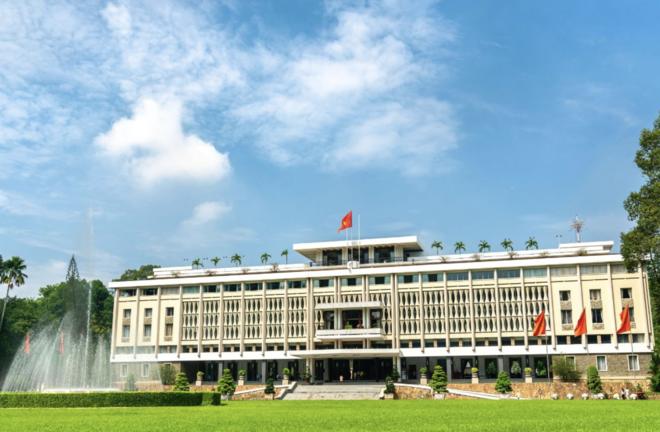
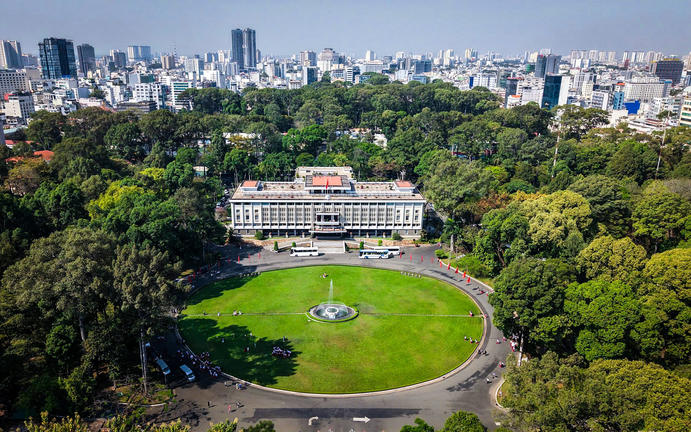
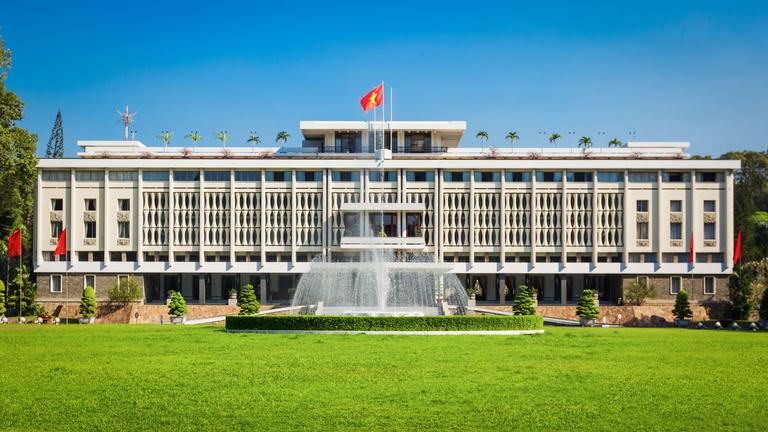
Independence Palace is one of Saigon’s most important historic landmarks and one of the best places in the city to get a sense of Vietnam’s modern history. Known formally as Reunification Hall, it stands on Nam Ky Khoi Nghia Street in central District 1 and is preserved as a major national historic site.
What makes it especially worthwhile is that it still feels remarkably intact. Rather than being just a façade or symbolic building, the palace allows you to walk through reception rooms, meeting chambers, private quarters and the basement command area, which helps bring the final years of the war into sharper focus. It is the sort of place where the atmosphere matters as much as the displays, and many visitors find it more interesting than they expected because so much of the interior has been preserved.
Architecturally, it has a clean, confident 1960s style that feels quite different from Saigon’s grand French colonial buildings. The broad façade, spacious ceremonial rooms and manicured grounds give it a sense of importance, but it is the historical weight of the place that stays with most people. This was the seat of South Vietnam’s government, and it remains one of the most recognisable symbols of the end of the war.
It is very easy to combine with the War Remnants Museum, Notre Dame Cathedral area and the Central Post Office, so it fits naturally into a city sightseeing day. Allow at least an hour, and a little longer if you enjoy history. It is best visited earlier in the day if you would prefer a calmer experience before the larger tour groups arrive.