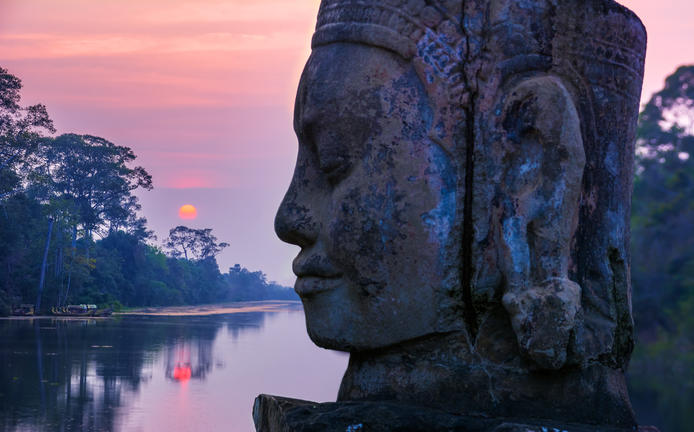
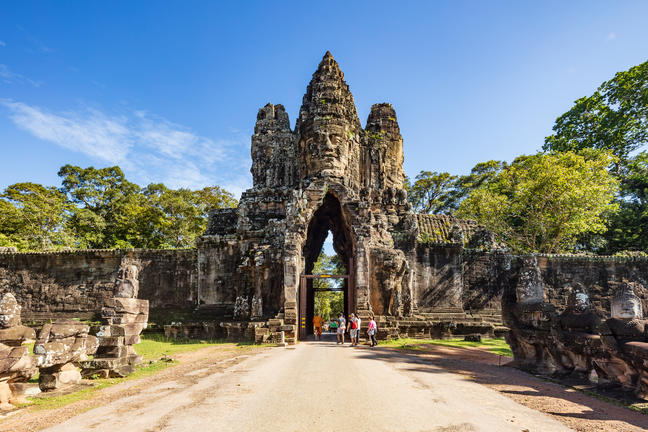
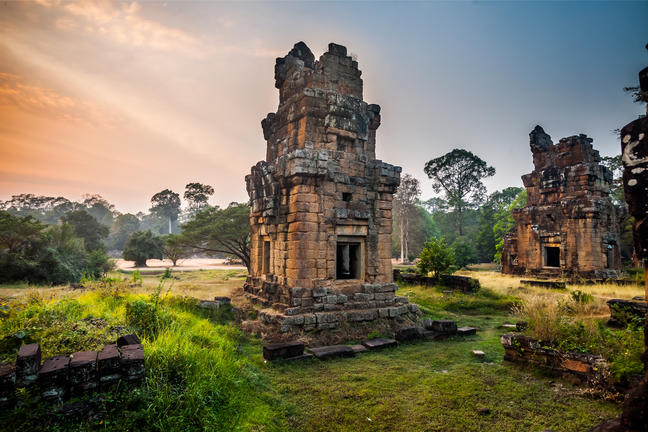
One of the great historic complexes of Siem Reap, Angkor Thom was the last great capital of the Khmer Empire and remains one of the most important parts of the wider Angkor archaeological area. Built around 1200 by King Jayavarman VII, it was conceived as a vast royal city rather than a single temple, with monumental gates, broad causeways, terraces, temples and ceremonial spaces enclosed within impressive walls and moats.
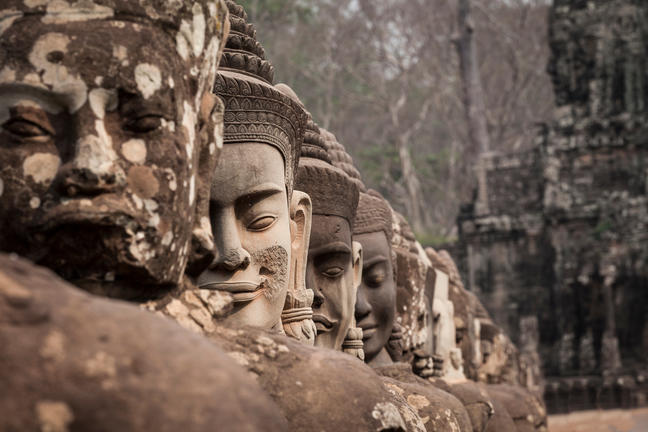
What makes Angkor Thom especially rewarding is that it gives a much broader sense of the scale and ambition of the Khmer capital than any single monument can on its own. The city was planned as a symbolic and political centre, and moving through it gives a stronger feeling for how the Angkor world once functioned. The monumental gates, lined approaches and vast enclosure still create a real sense of arrival and grandeur.
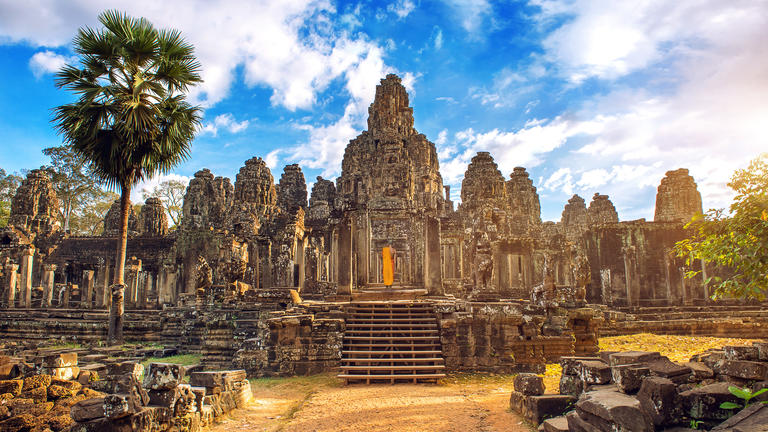
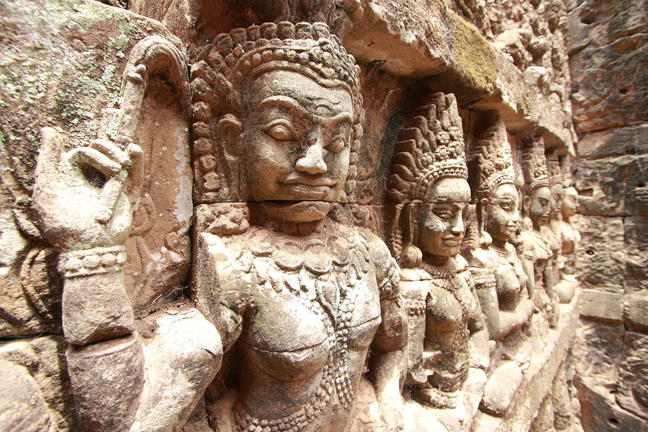
At the heart of Angkor Thom is Bayon Temple, famous for its great carved stone faces, but the wider complex also includes important sites such as the Terrace of the Elephants, the Terrace of the Leper King and other royal and ceremonial remains. This is part of what makes Angkor Thom so satisfying. It is not just one stop, but a whole historic zone that reveals different layers of imperial life, religion and architecture.
For most travellers, Angkor Thom is an essential part of any Angkor itinerary and works particularly well combined with Bayon, Ta Prohm and Angkor Wat. For many visitors, it is the place that gives the clearest sense of Angkor not just as a collection of temples, but as the centre of a once-great imperial city.