The great icon of Cambodia and the headline sight of Siem Reap, Angkor Wat is one of the most extraordinary temple monuments anywhere in Asia. Built in the 12th century during the reign of King Suryavarman II, it was originally dedicated to Vishnu and later became an important Buddhist temple, which helps explain the depth of history and symbolism found throughout the site. It is also the best-known monument within the wider Angkor Archaeological Park, the vast UNESCO-listed complex that preserves the remains of the Khmer Empire’s great capitals.
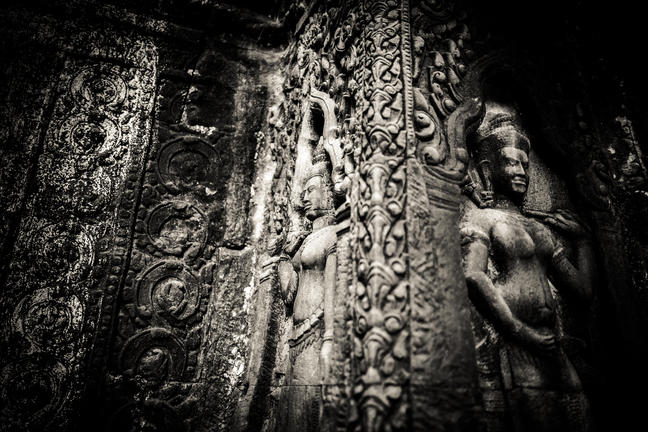
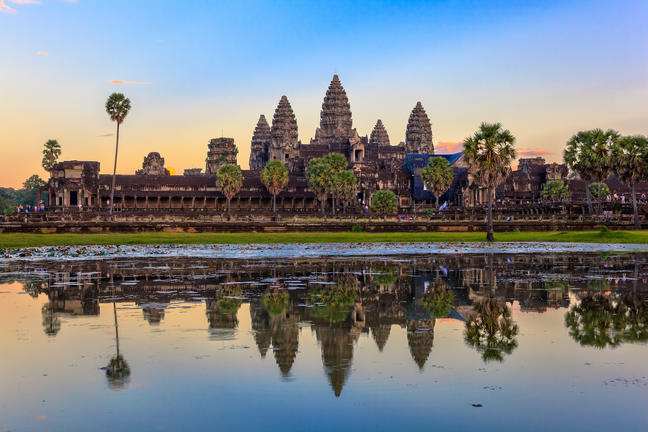
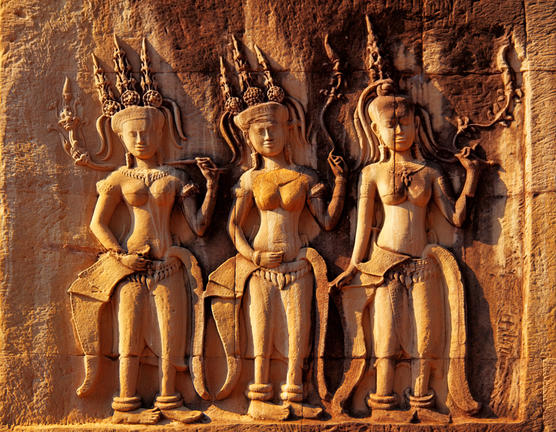
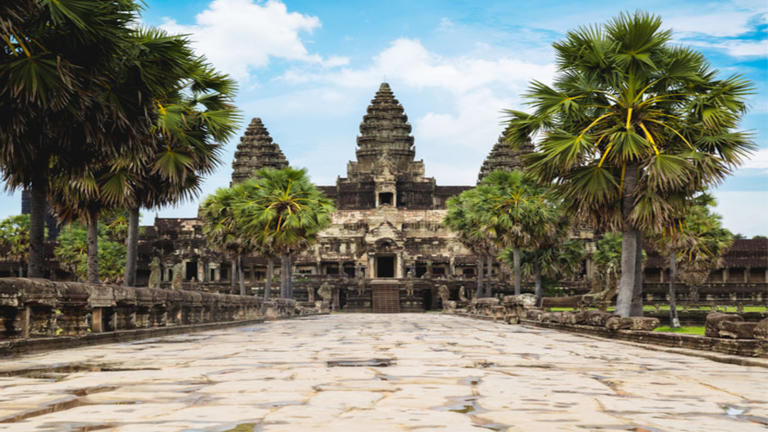
What makes Angkor Wat especially remarkable is its scale, symmetry and refinement. The long sandstone causeway, vast moat, soaring central towers and endless carved galleries all create an extraordinary sense of grandeur, yet the detailing is just as impressive as the overall scale. Bas-reliefs line the walls with scenes from mythology, royal history and epic battles, and the balance of architecture, symbolism and craftsmanship is what makes the temple so memorable.
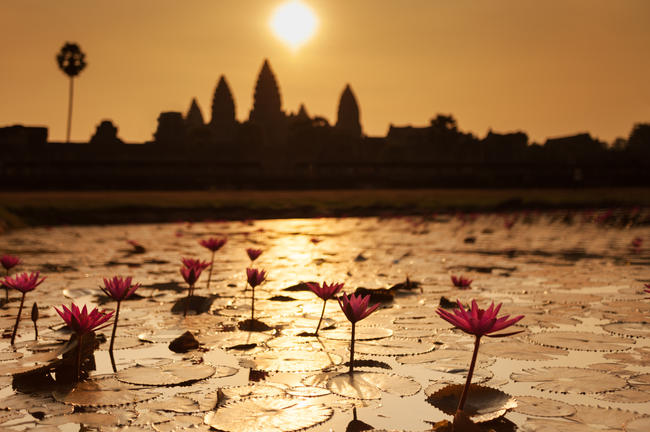
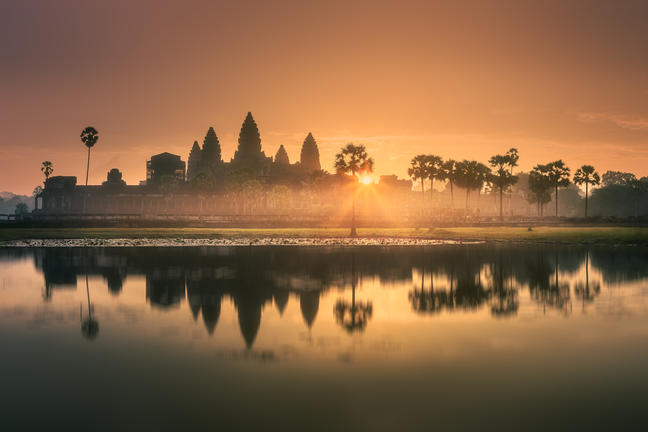
For many visitors, sunrise is one of the classic moments to experience Angkor Wat, when the silhouette of the towers is reflected in the water in front of the temple. That said, it is equally rewarding later in the day when there is more time to appreciate the carvings and the structure itself. The temple is large enough that it never feels like a quick stop, and it deserves proper time rather than a rushed visit.
For most travellers, Angkor Wat is not only the essential sight in Siem Reap, but one of the great cultural experiences of Southeast Asia. It works best as the centrepiece of a wider Angkor itinerary, but even on its own it is a place of real scale, beauty and historical depth.