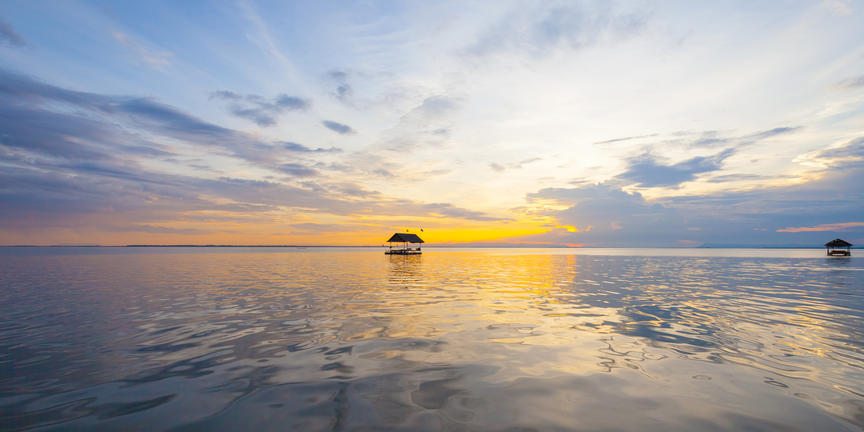
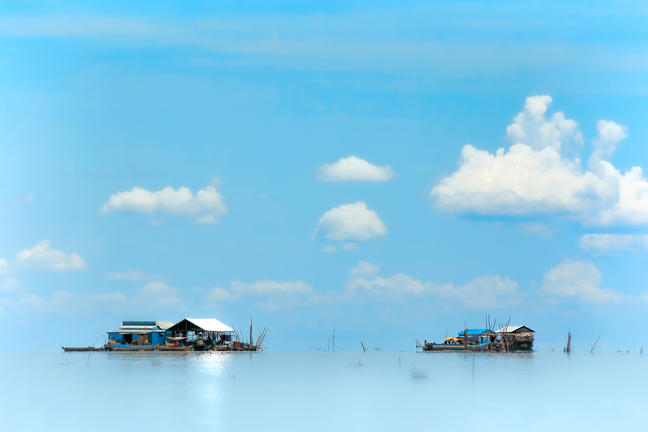
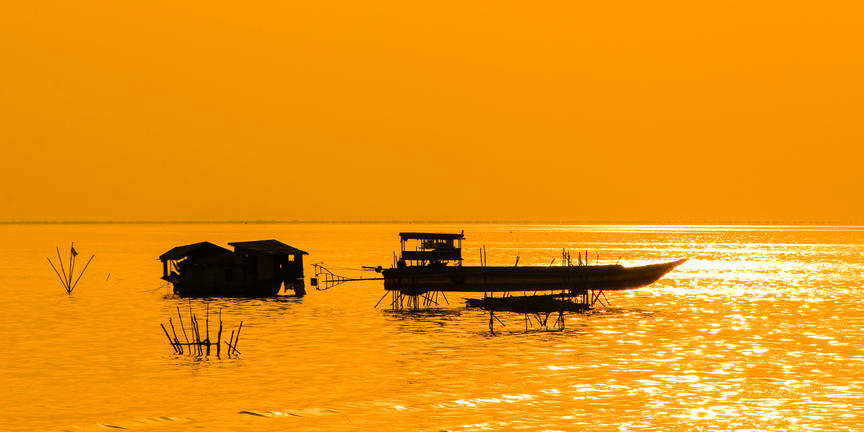
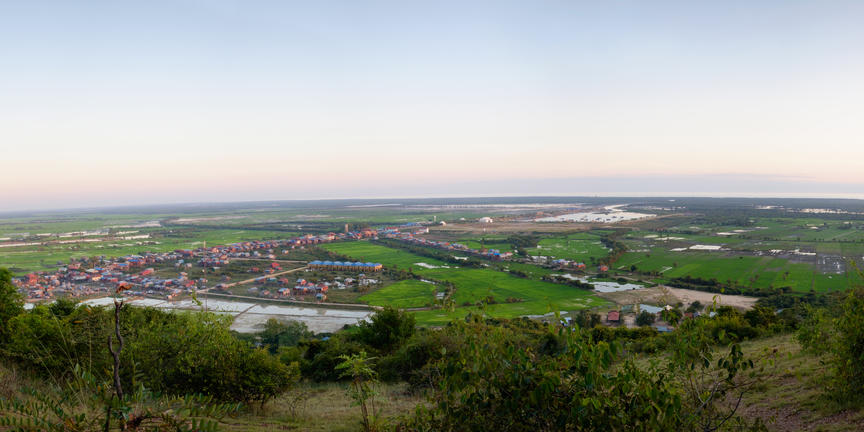
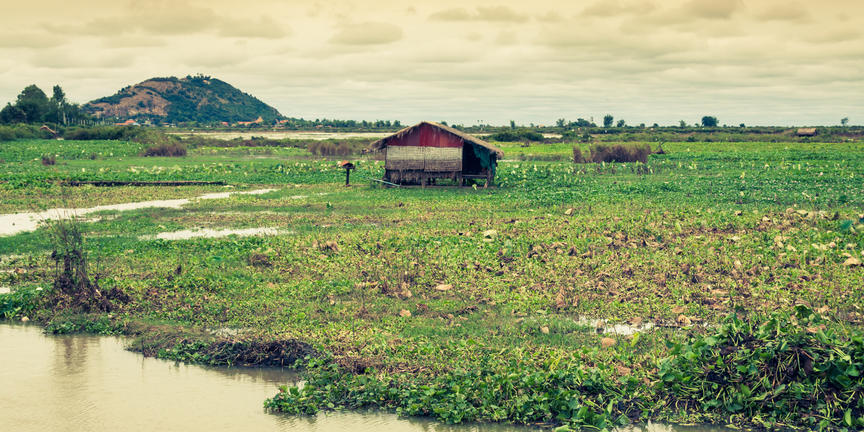
Tonlé Sap is one of Cambodia’s most remarkable natural landscapes, a vast freshwater lake whose size changes dramatically with the seasons. During the dry months it retreats into a broad, open body of water, while in the wet season the lake swells across the surrounding floodplain, filling forests, fields and channels with life. This annual rhythm has shaped the communities, wildlife and culture of central Cambodia for centuries.
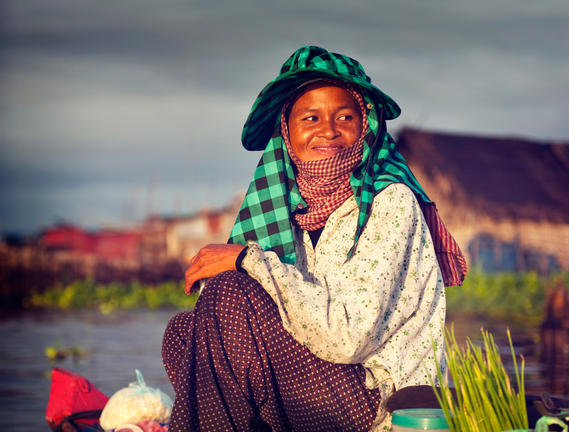
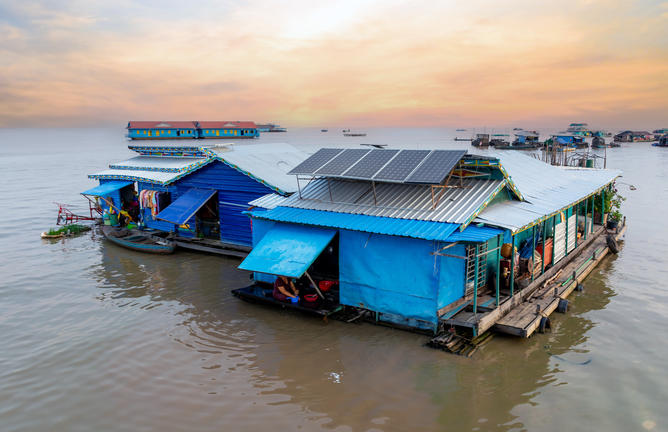
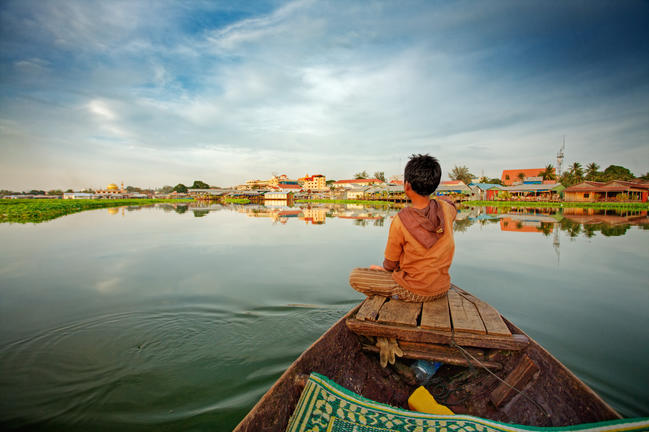
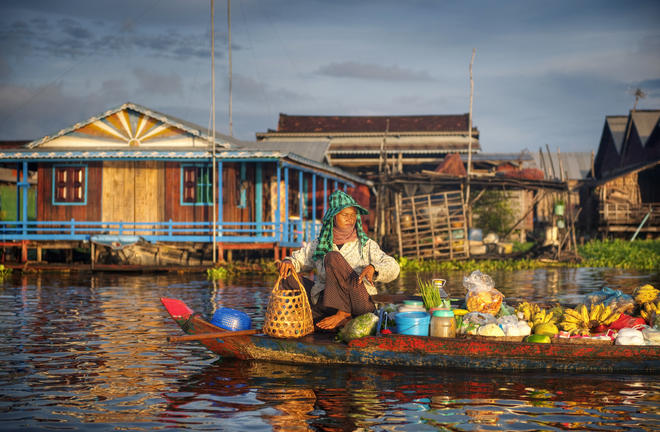
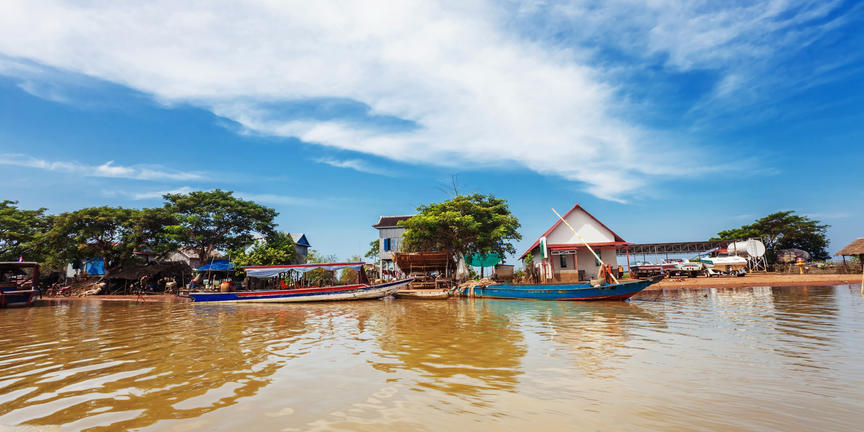
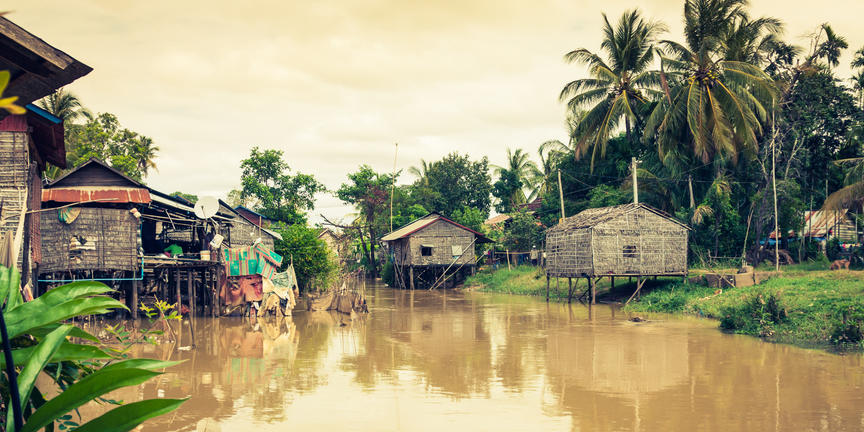
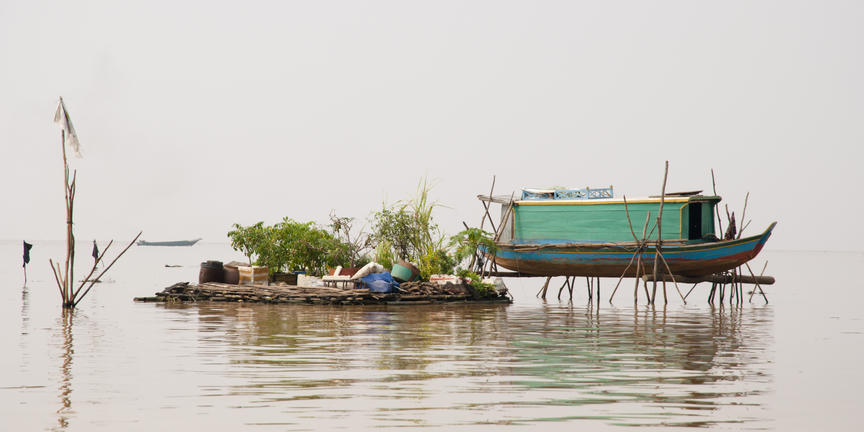
For travellers visiting from Siem Reap, Tonlé Sap offers a very different perspective from the temples of Angkor. A boat trip takes you out into a world of floating houses, stilted villages, fish traps, small schools, pagodas and waterborne markets, where daily life moves according to the level of the lake. Depending on the season, you may pass through flooded forest, see fishing boats returning with their catch, or watch children paddling between homes as naturally as others might walk along a village lane.
The lake is also one of Southeast Asia’s most important freshwater ecosystems, supporting birdlife, fish stocks and wetland habitats that are vital to Cambodia. It’s worth visiting with a good local guide, as this helps put what you’re seeing into context and gives a more thoughtful understanding of life on the lake.
The best experience is usually in the wet or post-wet season, when water levels are higher and the scenery is at its most atmospheric. During the low-water months, some areas can feel more exposed, but the visit still offers a fascinating insight into Cambodia’s relationship with water, food, community and resilience.