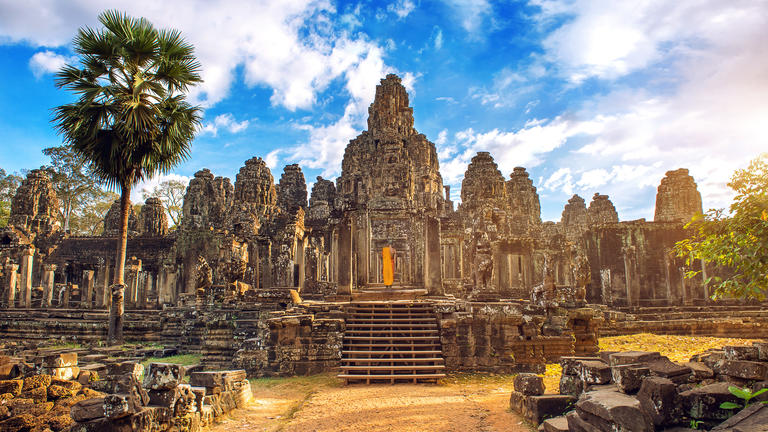
Set at the heart of Angkor Thom, Bayon Temple is one of the most remarkable and instantly recognisable monuments in the Angkor complex. Built in the late 12th to early 13th century under King Jayavarman VII, it is best known for its great stone towers carved with serene smiling faces, which give the temple a character unlike anywhere else in Cambodia. UNESCO describes Bayon as a unique monument within Angkor, notable for its monumental face-towers and intricate decorative programme.
What makes Bayon especially appealing is its atmosphere. Unlike the formal symmetry of Angkor Wat, Bayon feels more enigmatic and layered, with galleries, terraces, towers and passageways unfolding in a more intimate and almost maze-like way. The faces are the temple’s defining image, and they create an extraordinary sense of presence as you move through the complex.
The bas-reliefs are another major highlight. They depict both mythological scenes and scenes of everyday Khmer life, warfare and ceremony, which gives the temple a richness that goes well beyond its dramatic towers. UNESCO notes that Bayon also reflects an important religious transition, having begun as a Buddhist monument before later incorporating Hindu elements and eventually returning to Buddhist use.
For most travellers, Bayon Temple is one of the absolute essentials of Siem Reap and works perfectly as part of a wider visit to Angkor Thom, often combined with the Terrace of the Elephants and Ta Prohm. For many visitors, it is the most atmospheric and unforgettable temple in the Angkor area.