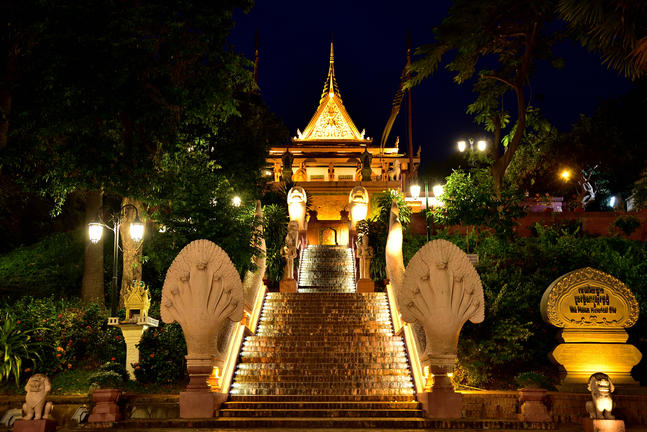
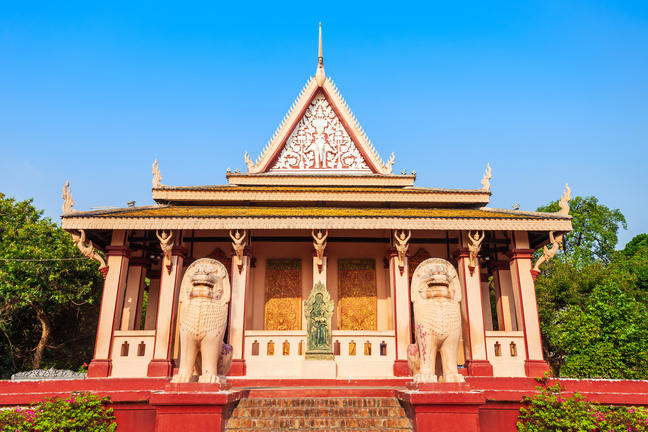
Set on a small hill in the heart of Phnom Penh, Wat Phnom is one of the city’s most important historic and spiritual landmarks. More than simply a pagoda, it is closely tied to the founding legend of the capital itself. According to tradition, a wealthy woman named Daun Penh discovered sacred statues in a tree floating on the river in 1372 and created an artificial hill on which a shrine was built. The city later took its name from this place, with Phnom Penh meaning “Penh’s Hill”.
What makes Wat Phnom especially appealing is the way it combines legend, spirituality and a central city setting. The pagoda sits within a small landscaped park, and although the surrounding city is busy, the hilltop setting gives the site a calmer and more self-contained atmosphere. Steps lead up to the temple, and within the grounds are shrines, statues and the large stupa of King Ponhea Yat, who later made Phnom Penh the capital in the 15th century.
The visit is not a long one, but it is a very worthwhile stop because it helps explain the origins and identity of the city. It also adds a spiritual and local dimension to a stay in Phnom Penh, balancing the more formal royal and museum sights elsewhere in the capital.
For most travellers, Wat Phnom works well combined with the Riverside, the Royal Palace or the nearby market areas. It may not be the grandest monument in Phnom Penh, but it is one of the most meaningful and characteristic places to visit.