One of the most atmospheric temples in the Angkor area, Ta Prohm is famous for the extraordinary way jungle and architecture have become intertwined. Built in 1186 by King Jayavarman VII, it was founded as a Buddhist monastery and dedicated to the king’s mother. Today it is one of the most photographed and memorable monuments in Siem Reap, and for many visitors it offers the most hauntingly beautiful experience in the Angkor complex.
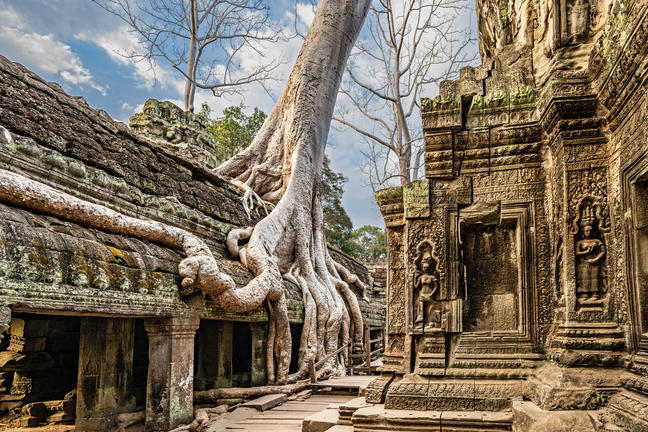
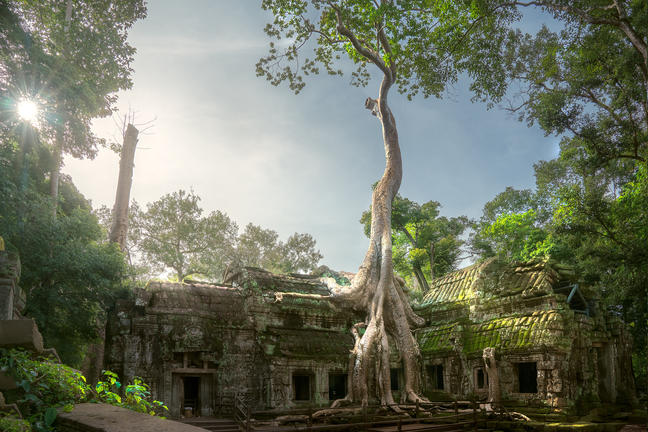
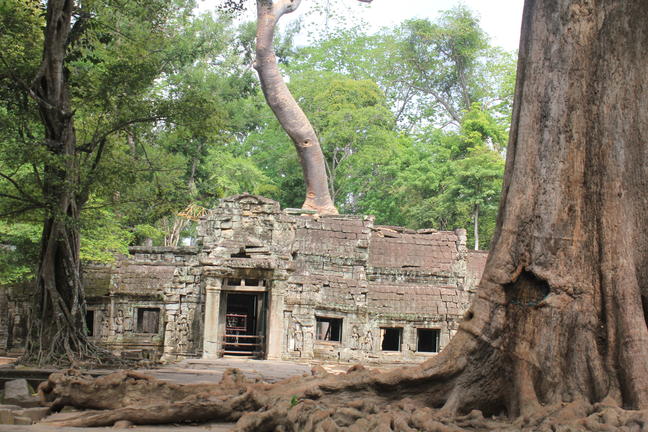
What makes Ta Prohm especially appealing is its character. Unlike some of the more formally restored temples at Angkor, it has been left with much of its ruinous atmosphere intact, with giant silk-cotton and strangler fig trees spreading over towers, galleries and courtyards. The great roots seem to pour over the stone, giving the temple a dramatic and almost dreamlike quality. It is this mixture of monument and jungle that makes Ta Prohm so distinctive.
The temple also has real historical depth. Originally known as Rajavihara, it was not only a religious site but a major monastic and educational centre. Inscriptions record a very large community connected with its upkeep, underlining the scale and significance it once had within the Khmer Empire.
For most travellers, Ta Prohm is an essential part of any Angkor itinerary and works particularly well combined with Angkor Thom and Bayon. It is best approached as a place to wander slowly rather than rush through, as much of its appeal lies in its atmosphere, textures and shifting light. For many visitors, it is the most evocative temple in the whole Siem Reap area.