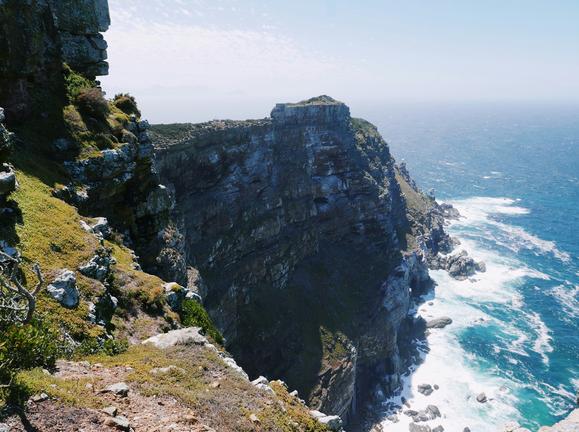
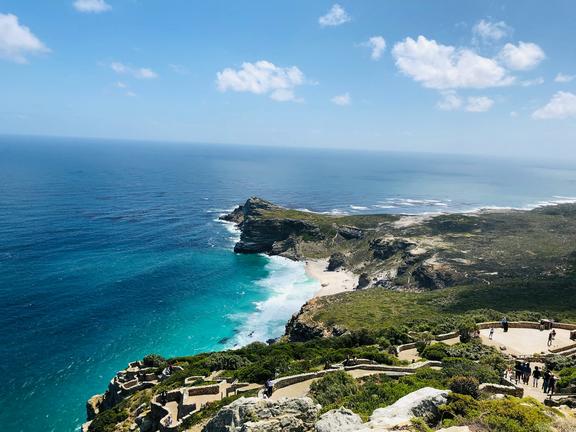
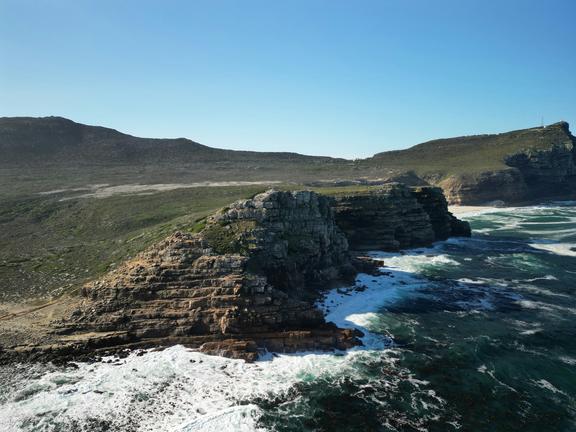
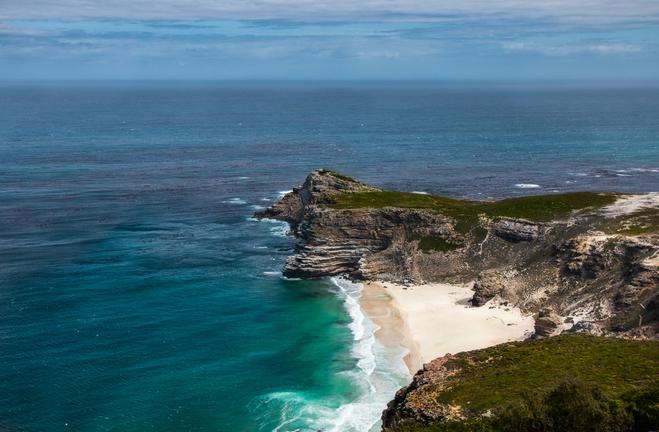
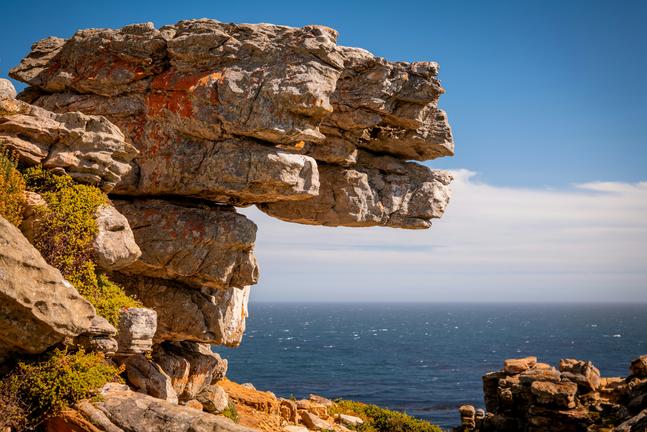
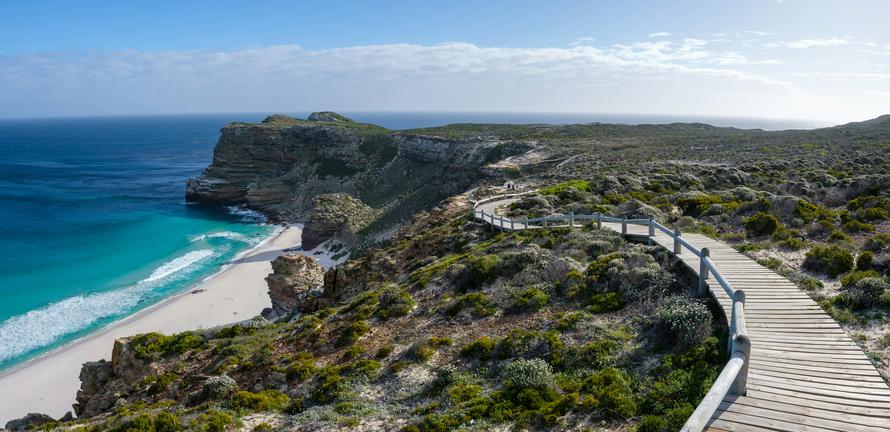
Part of the Table Mountain National Park that extends from Signal Hill in the north all the way to Cape Point in the south, the Cape of Good Hope is not the southern tip of Africa, despite lying at the south-west corner of the Cape Peninsula, just a little south of Cape Point on the south-east corner.
Cape Agulhas, roughly 150 kilometres southeast of here, holds this title instead. The Cape of Good Hope, however, remains a significant headland in the sense that from here one travels more eastward than southward, and it is not hard to imagine that rounding of the cape in 1488 was a major achievement.
This said, the Cape of Good Hope is one of two world-renowned landmarks within the Table Mountain National Park, the other is Table Mountain. These two familiar attractions are what draws thousands of visitors to Cape Town, not a new attribute to the Cape of Good Hope that functioned as something of a beacon for sailors for years and is still widely referred to as ‘The Cape’ by sea farers. the Cape Peninsula, just a little south of Cape Point on the south-east corner.
Credit: Unsplash/Falco Negenman
Credit: Unsplash/Shashank Kumar
Credit: Unsplash/Anton Lukin
Credit: Unsplash/Victor Smits
Credit: Unsplash/Matthias Wesselmann
Credit: Unsplash/Joshua Kettle
Visitors to the Buffelsfontein Visitor Centre in the Cape of Good Hope section of Table Mountain National Park can explore the internationally acclaimed Origins of Early Southern Sapiens Behaviour exhibition at no additional cost. Through engaging multimedia displays, the exhibition reveals the story of early modern human innovation and origins in Southern Africa, drawing on decades of groundbreaking archaeological research. The visitor centre also offers fascinating information about the region's unique flora and fauna, helping guests gain a deeper understanding of the natural wonders they may encounter during their visit. Entry is free for all park visitors.
The Cape of Good Hope Hiking Trail offers an unforgettable two-day circular trek covering approximately 33.8 km through the spectacular landscapes of Table Mountain National Park. The trail starts and ends at the Cape Point entrance gate, where secure overnight parking is available for hikers. Before setting out, visitors are required to complete the necessary overnight hiking registration and indemnity forms and collect the hut keys from the Access Control Officer at the gate. As park access is permitted only during normal operating hours, hikers should start their journey before 9:00 am to ensure they reach the overnight huts before sunset.
Visitors can join free guided walks at Cape Point led by enthusiastic volunteers, offering an excellent opportunity to explore the area's remarkable scenery, wildlife, and natural heritage. Walks typically depart from just inside the main gate on the second Sunday of each month, although dates may be adjusted in March and November due to race events. Participants are advised to wear sturdy walking shoes and bring a hat, sunscreen, rain gear, drinking water, and a light snack. A valid Wild Card or payment of the applicable conservation fee is required for entry to the reserve.