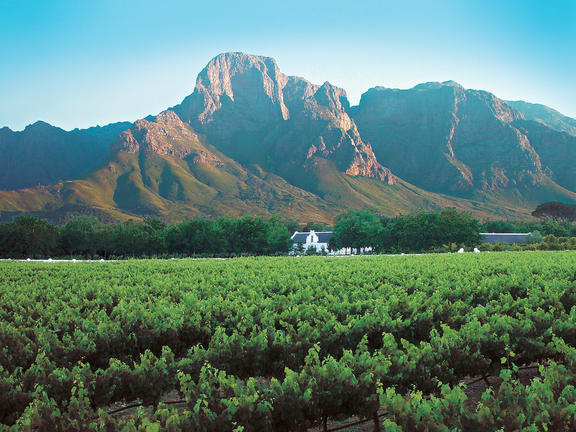
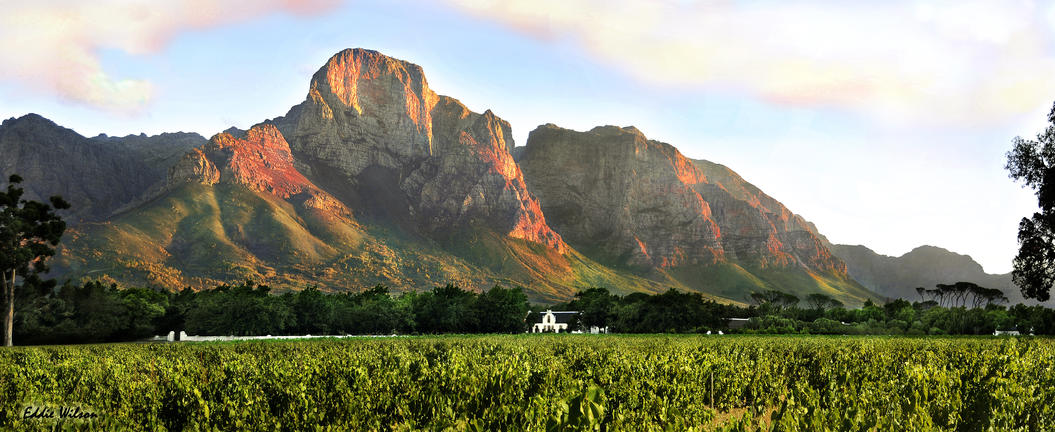
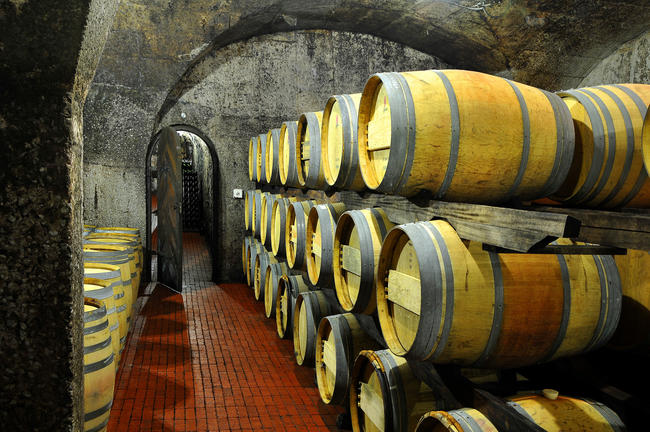
Today the Cape’s wine industry as well as the historic estate homesteads is one of the country’s most highly treasured assets. The first consignment of vines from German, French, Spanish and Bohemian vineyards arrived in the Cape in 1655. Jan Van Riebeek, then governor of the area, recorded in his diary on 2nd February 1659 that “Today, for the first time, the Lord be praised, wine was made from Cape grapes”.
Professional winemaking in the Cape began only after Simon van der Stel, the new commander of the settlement and future governor of the East India Company, founded the second oldest Dutch settlement in South Africa. It was named Stellenbosch, after himself, and is situated in a sunny and fertile valley to the east of Cape Town.
A great boost was given to wine production in South Africa by the arrival of Huguenot refugees from France, who settled around Franschhoek (“French Corner”), to the east of Paarl and Stellenbosch, between 1688 and 1690, and developed what is still an important wine-growing region. At the end of the 19th century, phylloxera ravaged South Africa’s vineyards, but by importing phylloxera resistant vines from America, South African winegrowers managed to reach their previous production level again by 1918.