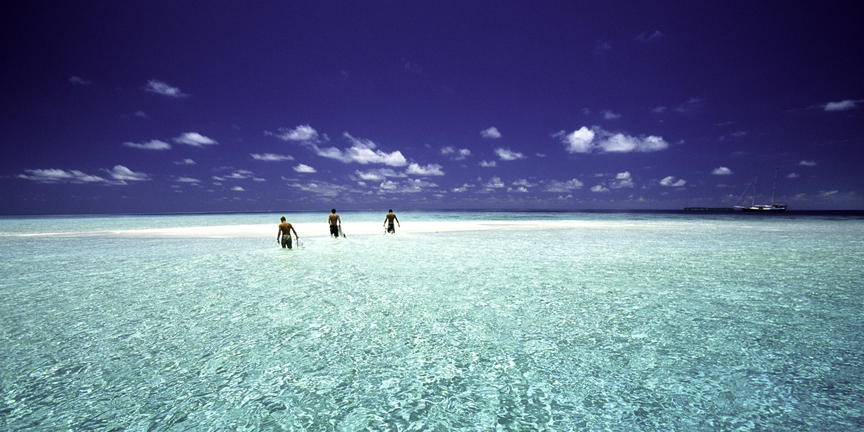
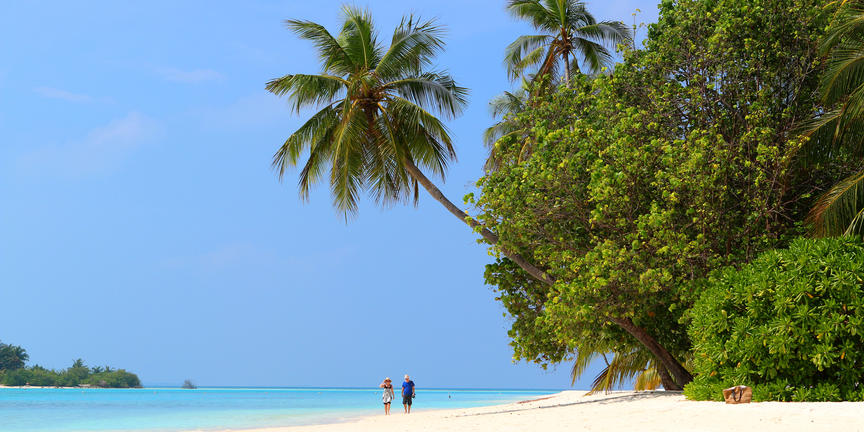
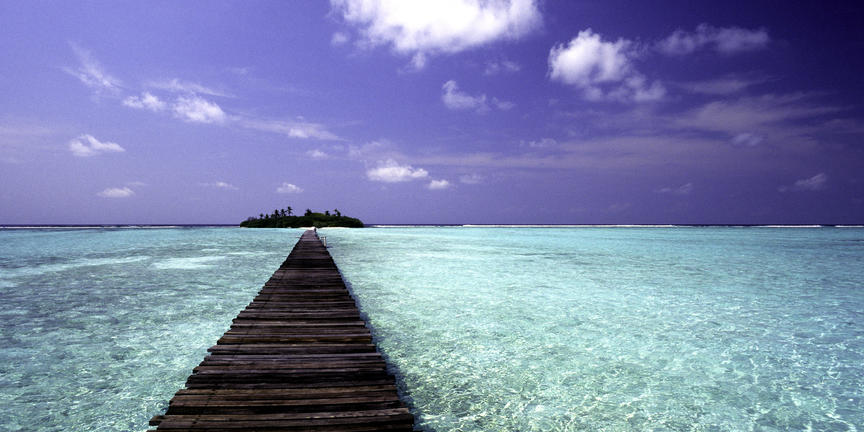
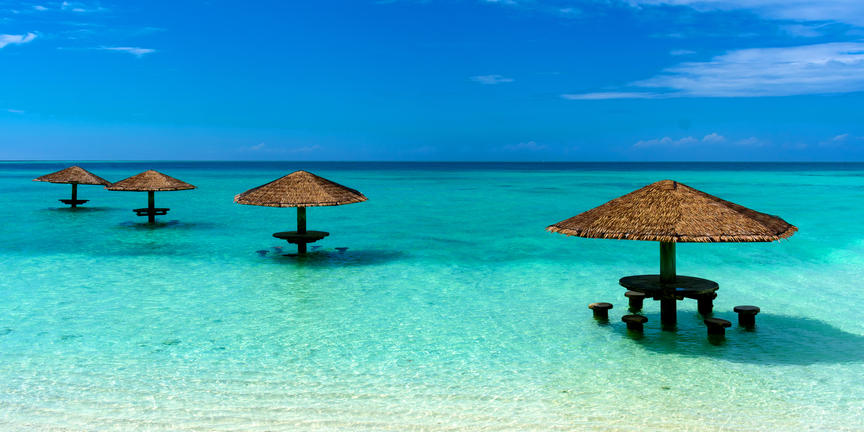
Situated in the beautiful Maldives, North Male Atoll makes up the northern part of the larger natural Male Atoll. It is home to the city of Male which serves as the national capital of the Maldives and the transport hub of the islands. The well-developed North Male Atoll is known for its many resorts and activities. Visitors can look forward to swimming in blue lagoons, diving and snorkelling through abundant coral reefs, lazing on pristine white-sand beaches, and enjoying excellent surfing along its eastern coast which is said to have the best waves in the Maldives.
Here are some possible sites you may visit:
Lankan Manta Point - Lying along the channel reef of Lankanfushi (now Paradise Island Resort), this large block of coral is home to hundreds of cleaner wrasse. During the south west monsoon (May to November) the current runs from west to east, so the mantas feed on the outside of the eastern side of the Atolls. After they have had a feed, they come into cleaning stations such as Lankan Manta Point and get cleaned by the cleaner wrasse; a perfect chance for divers to get up close and personal with these majestic mantas.
Banana Reef: was the first dive site to be discovered in the Maldives continues to be one of the most popular. The dive, which ranges in depth from 5 to 30 meters, has several interesting characteristics including a pinnacle and some overhangs. Coral formations here are prolific and colourful, attracting an extensive variety of fish, including squirrelfish, bannerfish and oriental sweetlips. Currents can be strong at times around the reef, with occasional turbulence occurring around the overhangs. As such, the use of a surface balloon is recommended.
Kuda Haa is a dramatic pinnacle, or thila, dive, which is widely considered one of the highlights of diving in the Maldives. Diving at Kuda Haa is at its best when the currents are not strong, when it is easy to navigate between the two parts of the pinnacle. Marine life to be expected at Kuda Haa is diverse and plentiful, including many macro species, including nudibranchs, flatworms, leaf fish and frogfish.