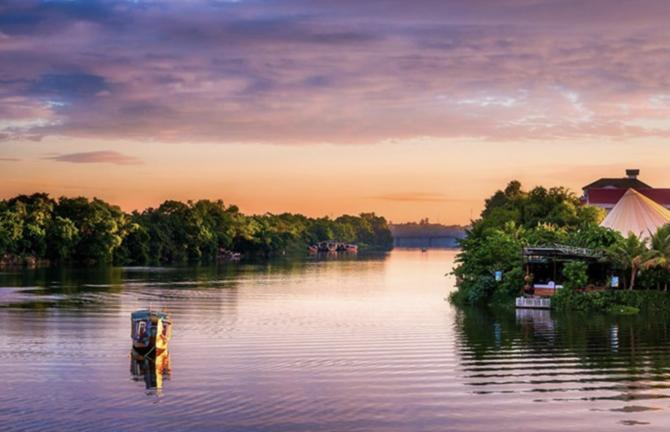
Flowing through the heart of Hue, the Perfume River is one of the city’s defining natural landmarks and an essential part of its character. More than simply a river running through town, it gives Hue much of its grace and atmosphere, linking the former imperial capital with temples, tombs and riverside neighbourhoods. The river is closely tied to the identity of Hue and remains one of the most recognisable symbols of the city.
What makes the Perfume River especially appealing is its calm, poetic quality. The river’s name is traditionally linked to aromatic plants and blossoms that drifted downstream from the hills, giving the water a gentle fragrance. Whether or not visitors notice that today, the river still feels deeply bound up with the romance and gentler pace for which Hue is known.
The river is also central to sightseeing in Hue. Many of the city’s best-known landmarks, including Thien Mu Pagoda and several of the royal tombs, are closely associated with it, and boat trips remain one of the classic ways to experience the city. A journey on the water gives a very different perspective on Hue, with temples, gardens, bridges and riverbanks unfolding at a slower rhythm.
For most travellers, the Perfume River is not a single attraction to tick off, but part of the wider experience of Hue itself. It works naturally with visits to the Imperial City, Thien Mu Pagoda and the royal tombs, and for many visitors it is the element that ties the whole city together most beautifully.