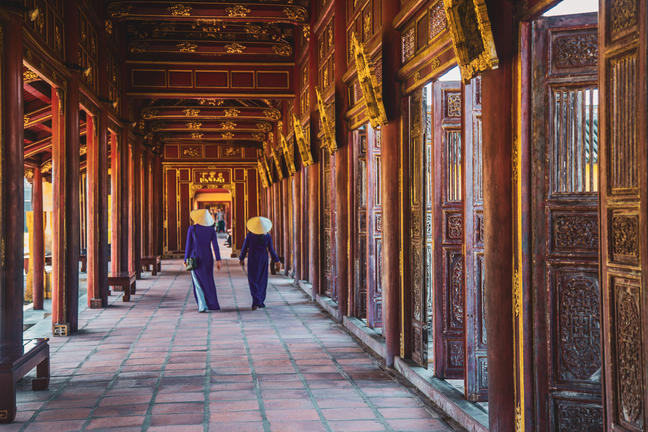
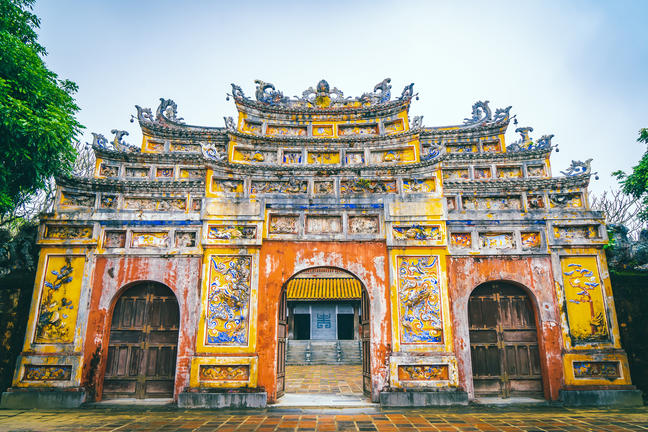
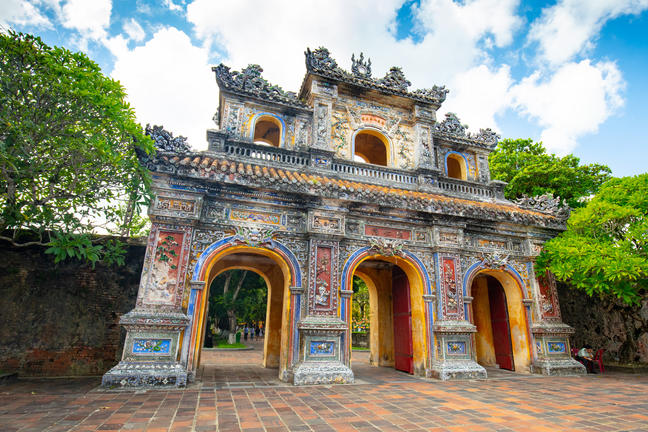
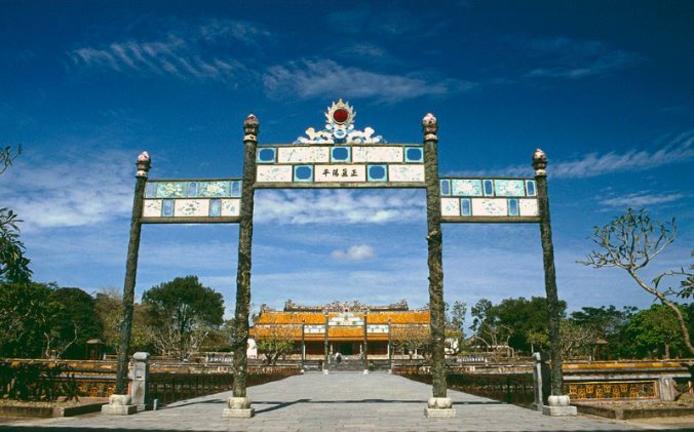
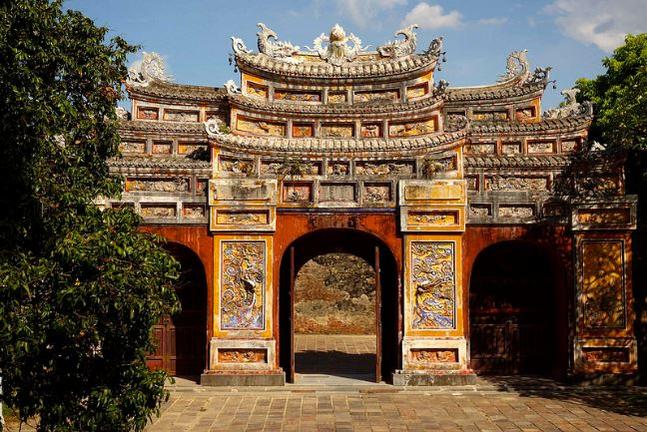
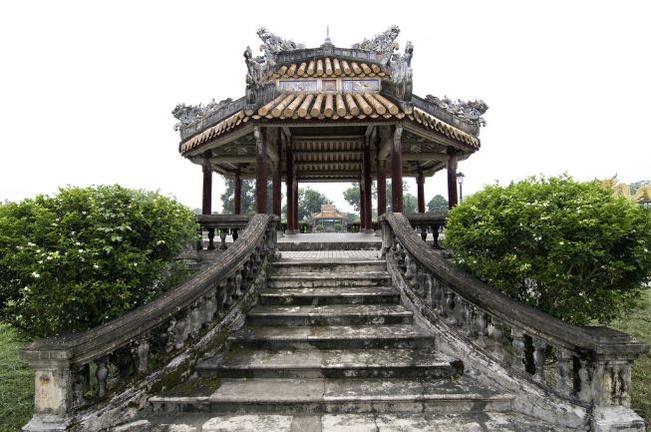
One of Vietnam’s most important historic sites, the Imperial City Hue is the great symbol of the former Nguyen imperial capital and one of the real highlights of central Vietnam. Set within a vast walled fortress, it was created in the early 19th century under Emperor Gia Long, who established his palace here in a layout inspired by Beijing’s Forbidden City. The wider complex once included royal quarters, ceremonial halls, courtyards, temples and the innermost Purple Forbidden City, all arranged within moats and fortified walls.
What makes the Imperial City especially rewarding is the scale and atmosphere of the site. This is not simply one palace building, but a broad historic complex where gateways, gardens, ponds and restored halls help bring Vietnam’s imperial past to life. Walking through the grounds gives a strong sense of the grandeur that once defined Hue, while also revealing the damage the city suffered during both the French and American wars.
Although parts of the original complex were heavily damaged, a great deal has been restored, and the site remains one of the most evocative places in Vietnam to understand the country’s royal history. It is also recognised as a UNESCO World Heritage site, which reflects its cultural importance.
For most travellers, the Imperial City Hue is an essential visit and one of the defining experiences of a stay in Hue. It works particularly well combined with the city’s royal tombs, Thien Mu Pagoda and Dong Ba Market, and it gives real depth and context to the wider story of Vietnam’s last imperial dynasty.