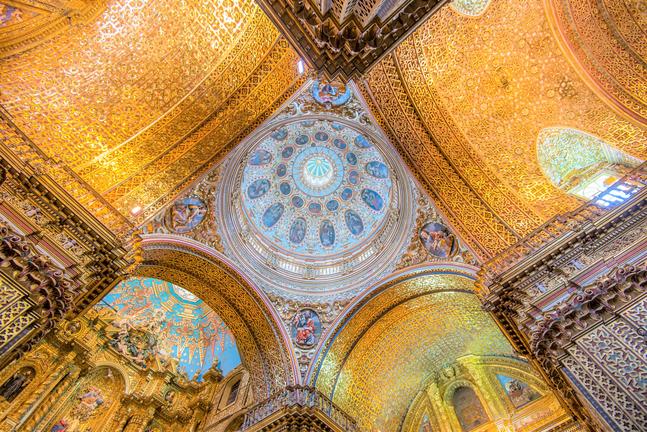
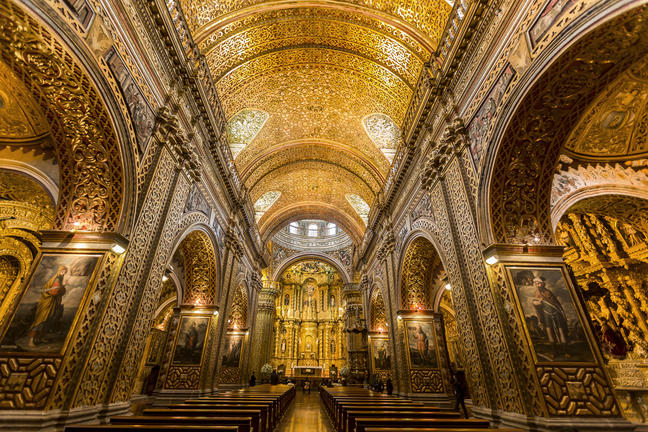
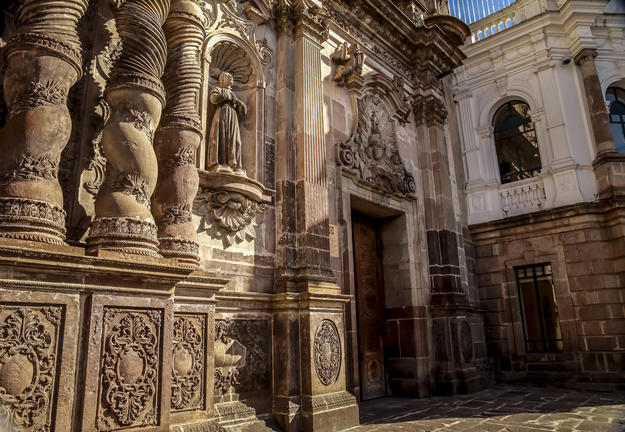
When you step inside the Church of La Compañía de Jesús, you’re not just entering a beautiful church—you’re stepping into one of the clearest expressions of the Catholic Church’s strategy after the Council of Trent. Everything you see here has a purpose. After the Protestant Reformation, the Church made a decision: art had to teach, inspire, and emotionally engage. And that’s exactly what this space does.
The style is Baroque—dramatic, immersive, and highly detailed. Notice how architecture, sculpture, and decoration all work together almost like a stage set. This is intentional. It was designed as a kind of “religious theater,” meant to make faith something you feel, not just understand. The gold leaf you see is part of that experience, but it’s not the main story. Its role is to reflect light, create movement, and guide your attention.
And finally, everything here follows very strict rules defined after the Council of Trent: the imagery had to be clear, didactic, and focused on devotion. No confusion, no ambiguity—every element is here to communicate a message. So rather than decoration, this church is a carefully constructed visual language—designed to educate, persuade, and move people.