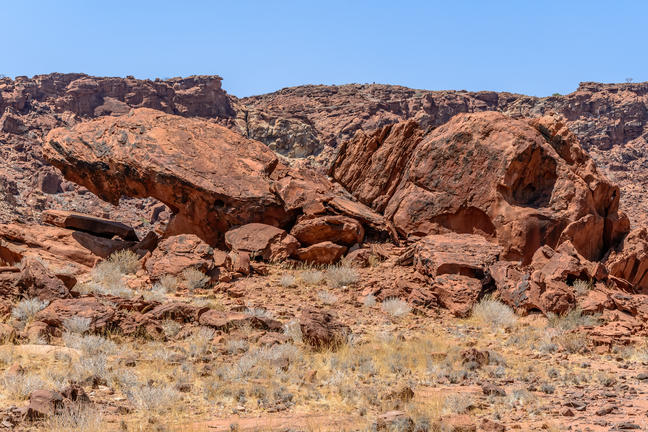
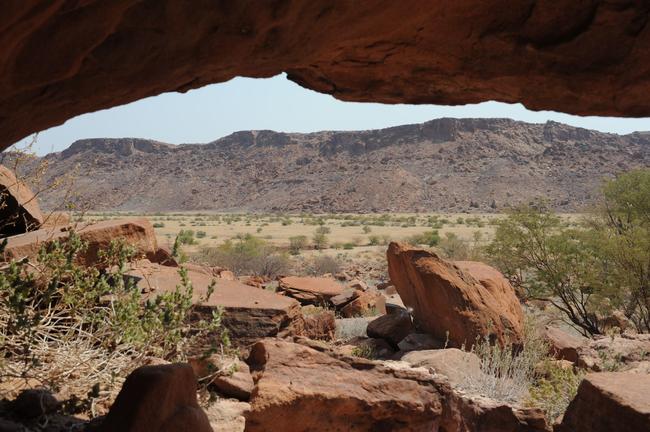
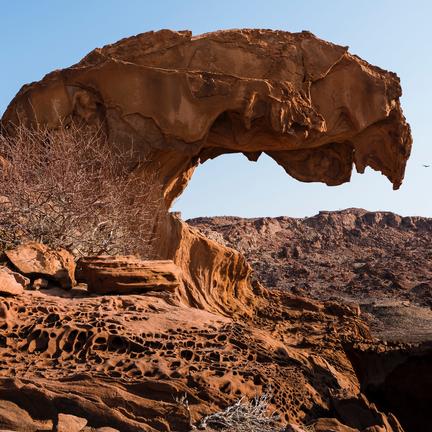
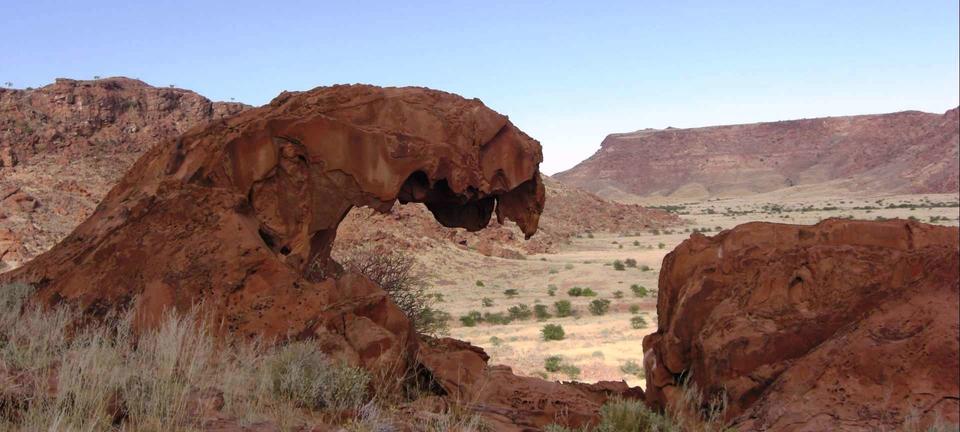
The name Twyfelfontein is a relatively new name for a very old fresh water spring known to early Damara people who lived in the area as /Ui-//aes (among packed stones). In the 1940s, when the area opened up for farming, the Twyfelfontein land was granted on licence to the farmer David Levin. At that time of Levin’s arrival, a few Damara people lived close to the spring in 32 huts .
Levin named the place Twyfelfontein which means “doubtful fountain” in the Afrikaans language. The name Twyfelfontein was registered in 1951. Today Twyfelfontein or /Ui-//aes are the official names proposed by Namibia.
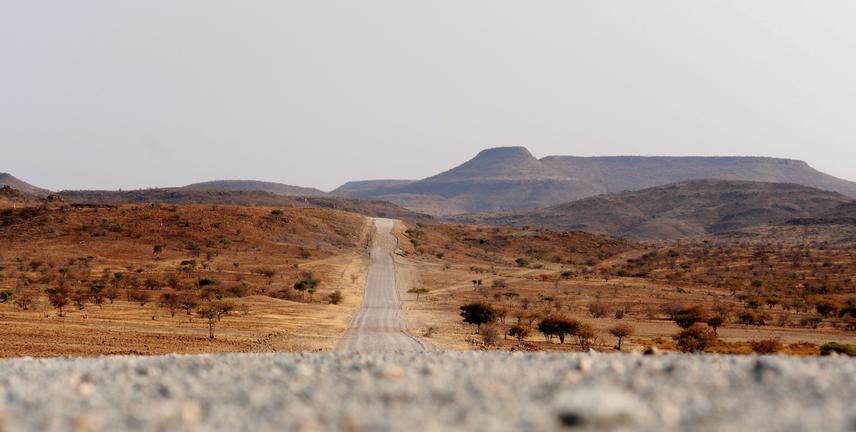
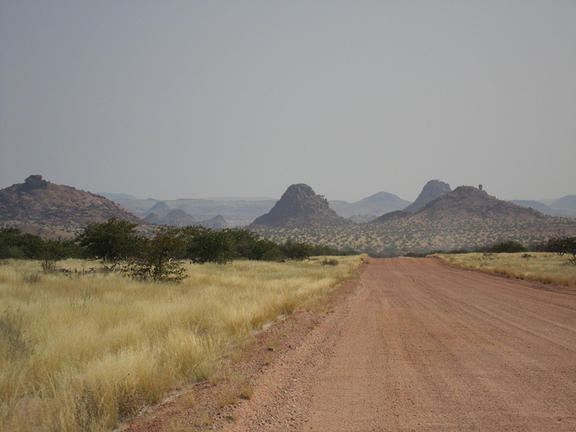
Today the name Twyfelfontein refers to the spring itself, to the valley containing the spring, and in the context of travelling and tourism also to a greater area containing nearby tourist attractions: the rock engravings, the Organ Pipes, Burnt Mountain, Doros crater, and the Petrified Forest.
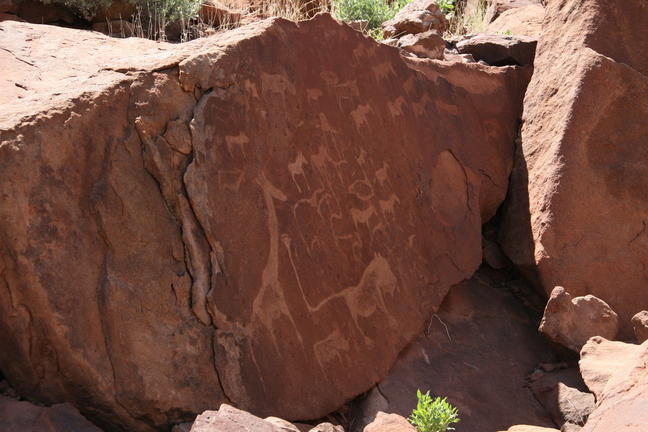
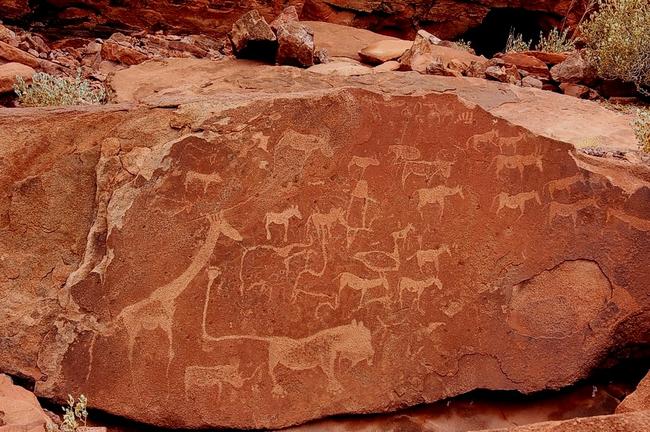
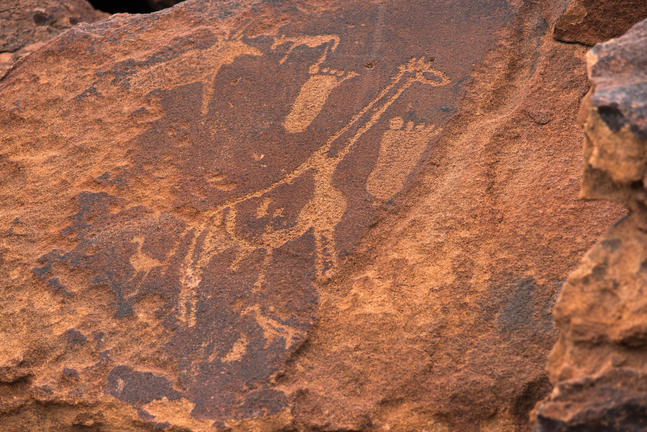
Twyfelfontein is a World Heritage Site boasting one of the richest rock art concentrations in Africa. Thousands of tourists come to this site each year to view some 2, 500 Stone Age rock engravings. The area is home to 17 rock art sites, which collectively encompass 212 engraved stone slabs. There are an additional 13 sites displaying rock paintings. All the rock engravings and rock paintings within the Twyfelfontein core area are attributed to San hunter-gatherers who lived in the region long before the influx of Damara herders and European colonists.