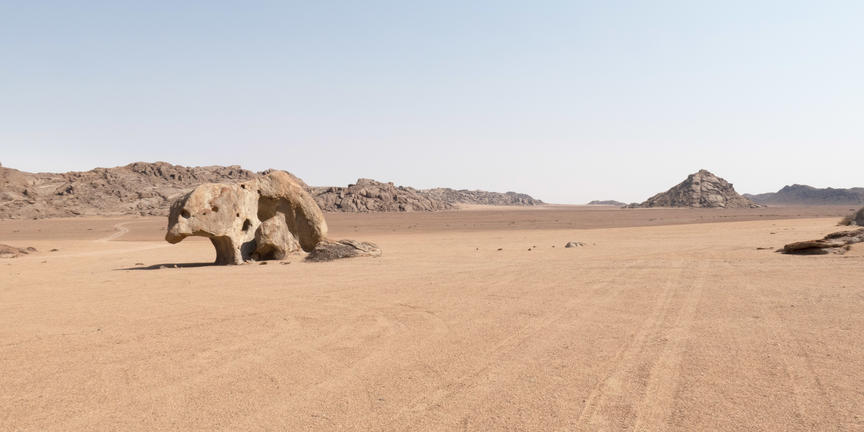
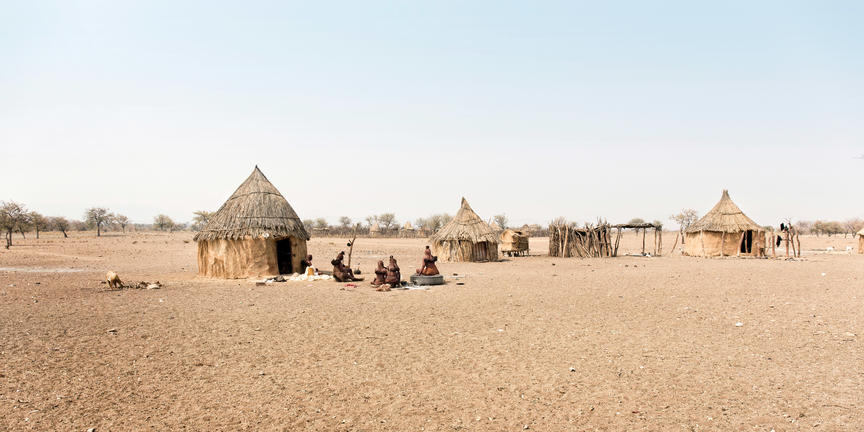
Located in the far northwest of Namibia, Kaokoveld (also called Kaokoland), with its district capital Opuwo, is one of the most pristine regions in the country.
The almost inaccessible area south of the Kunene River and north of Sesfontein can only be traversed in fully equipped expedition vehicles—and ideally, in the company of an experienced guide. There are hardly any signposts along the rough tracks.
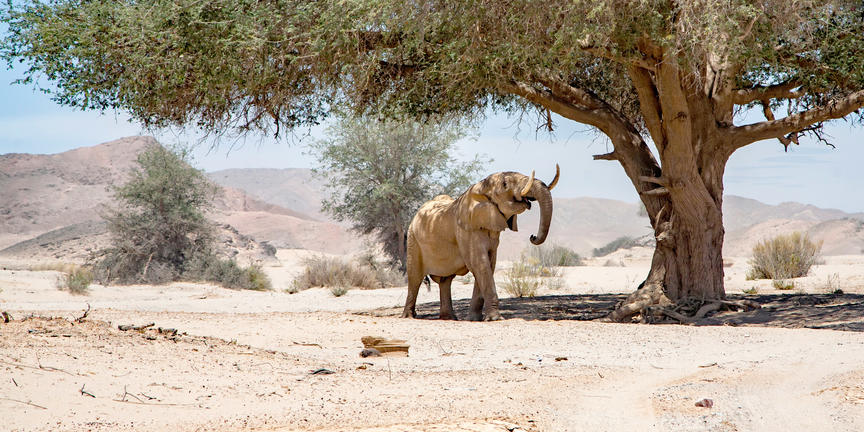
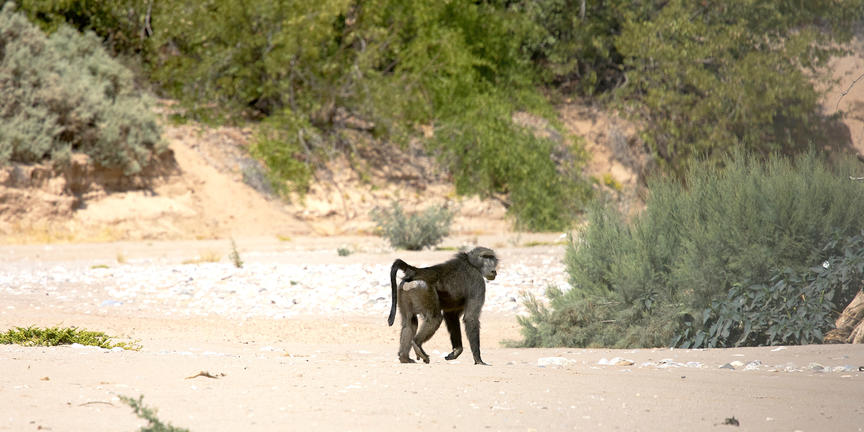
Kaokoveld is home to a number of endemic reptiles, while large mammals—including desert elephants, black rhinos, and giraffes—can often be seen visiting the riverbeds. The region also hosts a great variety of birdlife, including the endemic Cinderella waxbill along the Kunene River.
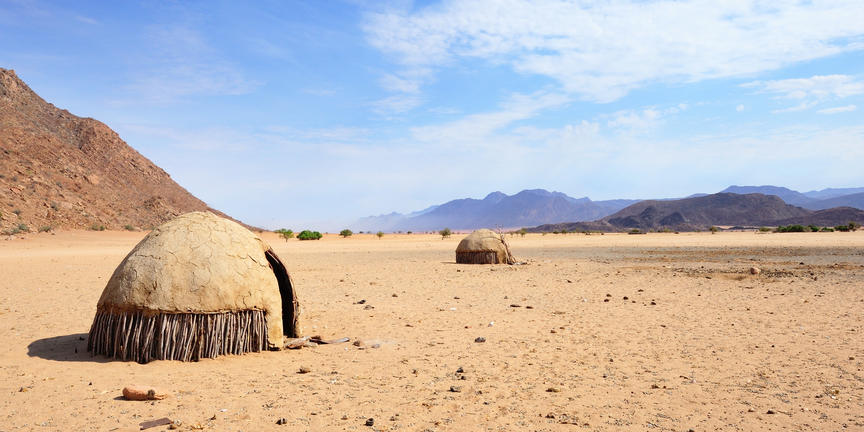
Kaokoveld is inhabited by the Himba, a semi-nomadic pastoral people who have largely preserved their ethnic identity and cultural traditions due to the seclusion of the region. The OvaHimba are predominantly livestock farmers who breed fat-tailed sheep and goats but count their wealth by the number of cattle they own.
These friendly people migrate with their animals—depending on the season—to various waterholes. Their clothing, hairstyles, and ornaments all hold special cultural significance and are integral to their identity and way of life.
The Himba are descendants of a group of Herero herders who fled into the remote northwest after being displaced by the Nama.
They have clung to their traditions, and the beautiful Himba women are especially noted for their intricate hairstyles and traditional jewellery.
As Himba men and women wear few clothes—typically just a loincloth or a goatskin mini-skirt—they rub their bodies with a mixture of red ochre and fat. This protects them from the harsh sun and gives their skin a distinctive rich red color, which is considered a symbol of beauty.
In addition to herding, the Himba also grow and farm rain-fed crops such as maize and millet.
It is recommended to visit the Himba with a guide, who can communicate with the OvaHimba in their own language and provide accurate translations.
A knowledgeable guide will also explain their traditions and customs, including what is appropriate and what should be avoided during your visit.
If you would like to bring a gift, it is best to choose practical items that the Himba can use in their daily lives. Local shops often stock suitable options, such as porridge flour or rice. It is not advisable to bring items from the Western world, such as toys or sweets for the children.
Always ask for permission before taking photographs and clarify whether there is a fee for doing so.