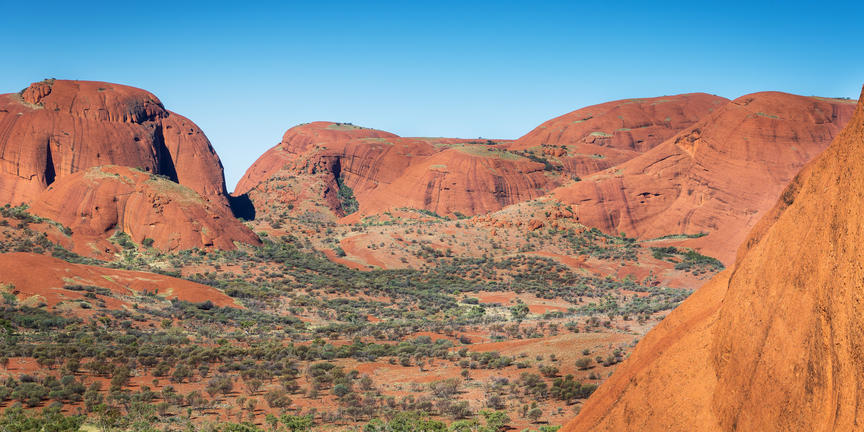
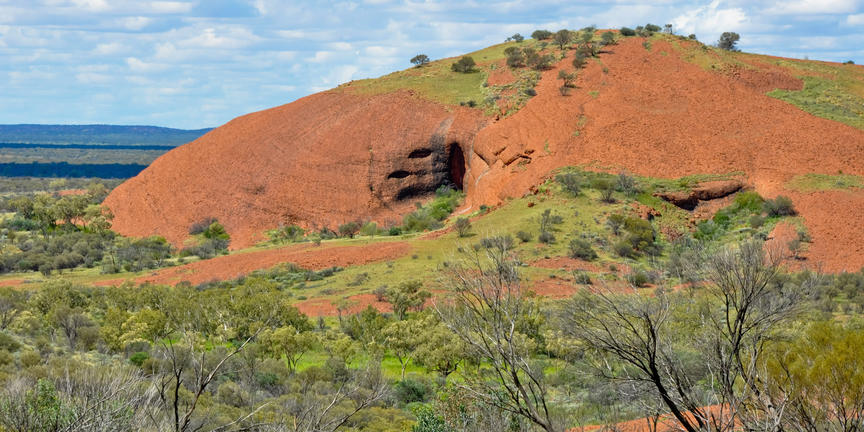
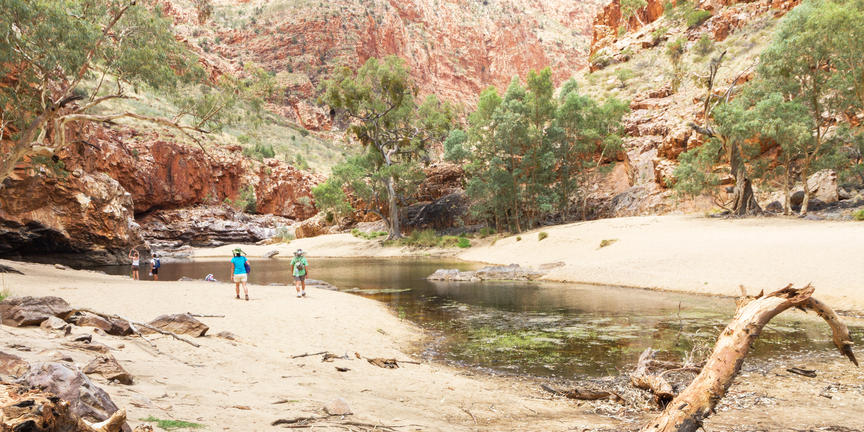
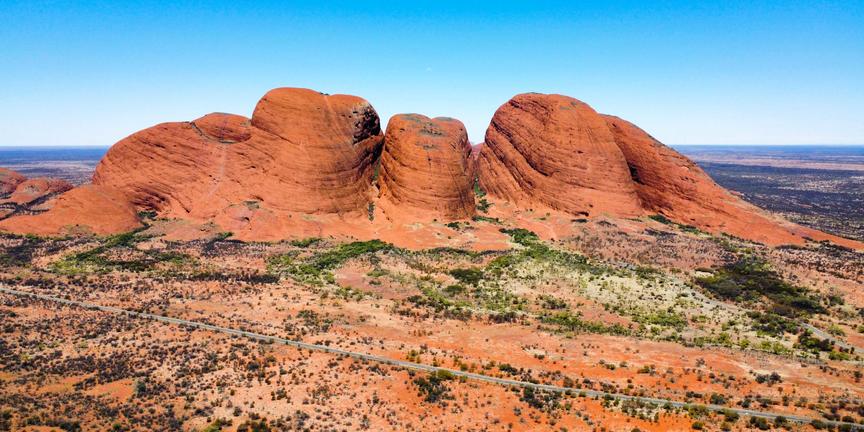
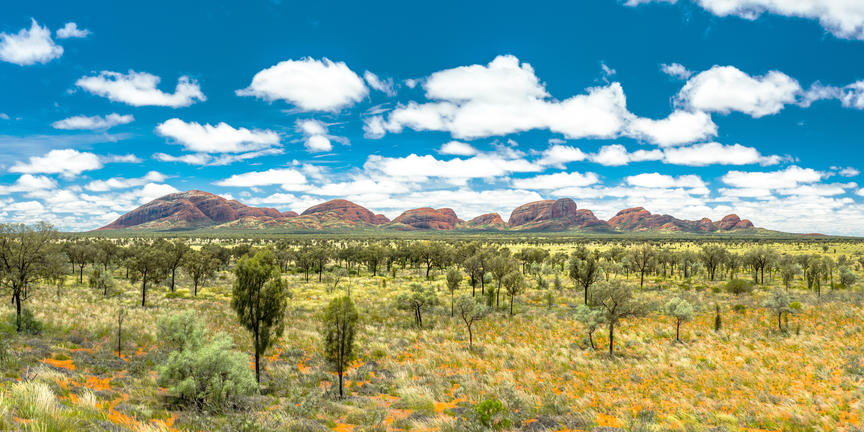
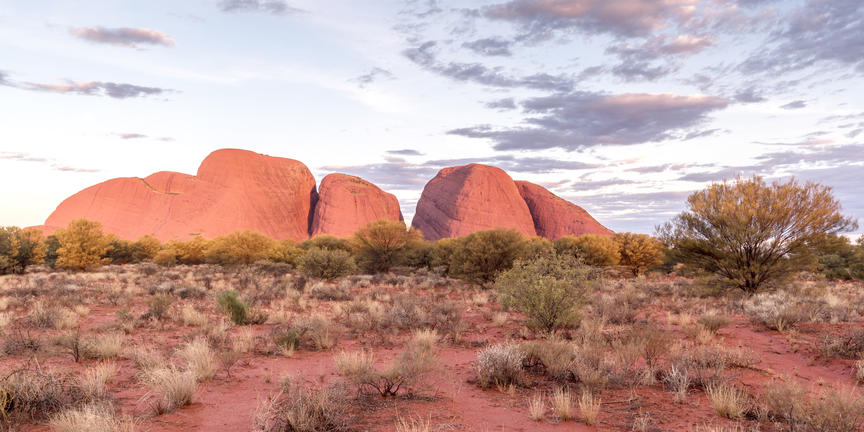
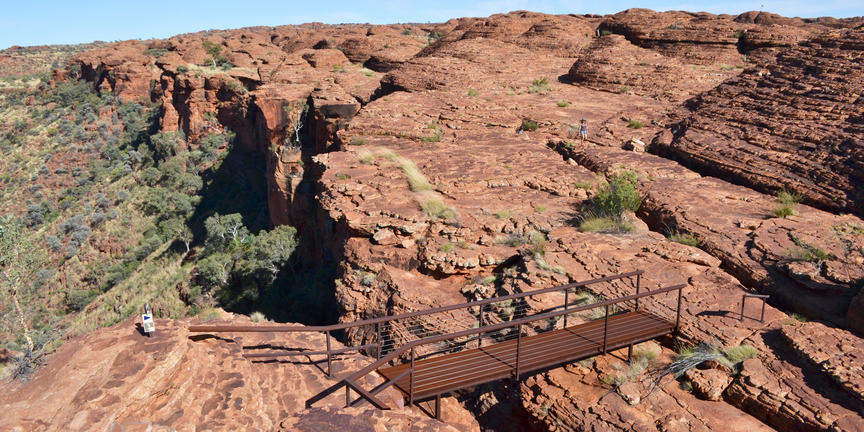
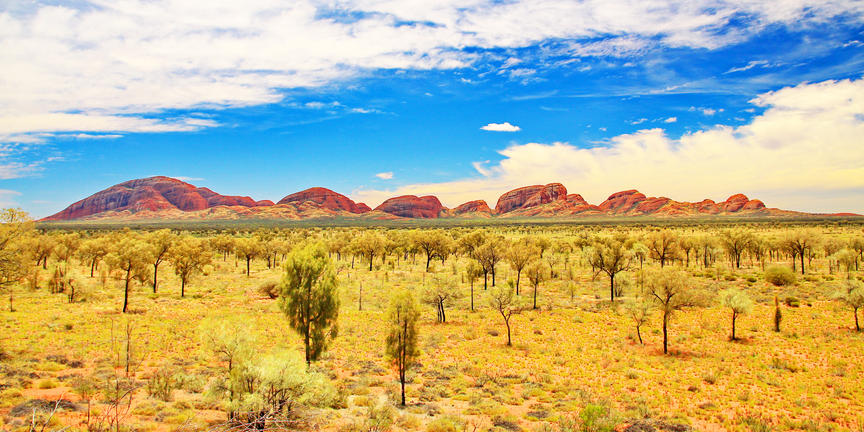
One of Australia’s most recognisable landscapes, Uluru-Kata Tjuta National Park is a UNESCO World Heritage Site that encompasses striking geological formations rising from the vast red plains of central Australia. At its heart, Uluru is a rust-red sandstone monolith rising 348 metres above the surrounding plain, while Kata Tjuta is a group of 36 great domes formed from conglomerate rock. The formations are central to the traditional beliefs of the Anangu, the Aboriginal people who are the park’s traditional owners, and the Cultural Centre introduces visitors to Anangu culture, Tjukurpa and traditional arts and crafts. Around Uluru, walking trails pass caves, rock shelters, ancient Aboriginal rock art and Mutitjulu Waterhole beneath the towering cliffs. Scenic drives connect the main sights, while guided tours explore the desert landscape and its cultural heritage. At dawn and sunset, changing light washes the rock faces in deep reds and oranges, while exceptionally clear skies create superb conditions for stargazing.