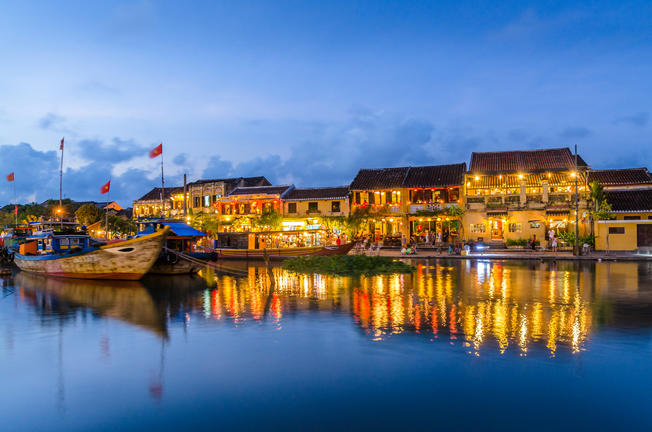
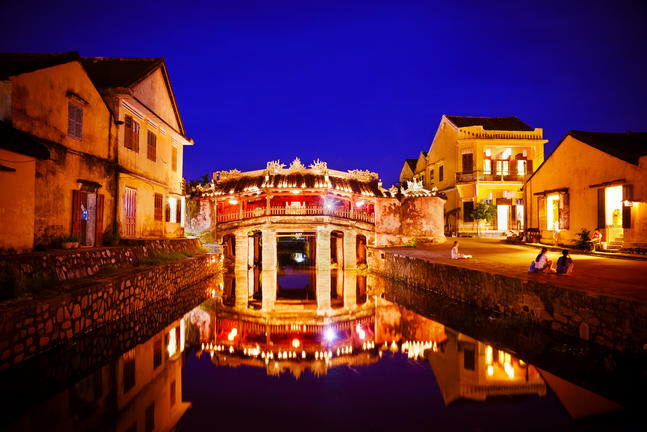
Hoi An, on Vietnam’s central coast, is a town steeped in history and timeless charm. Known as Faifo to foreign traders centuries ago, it was a bustling port from the 15th to 19th centuries, attracting merchants from China, Japan, Portugal, and the Netherlands. This rich trading heritage is evident in its eclectic architecture: Japanese merchant houses with curved rooflines, Chinese assembly halls adorned with intricate carvings, and French colonial buildings lining the ancient streets. The town’s canals once carried goods from the Thu Bon River to the sea, facilitating Hoi An’s prominence in regional and global trade. Today, with cars restricted from the main streets, visitors can wander peacefully through its lantern-lit alleys, riverside markets, and temples, while boutique hotels, tailor shops, art studios, and cafés bring the historic port to life. Nearby, the ruins of My Son Sanctuary offer a glimpse into the Cham Kingdom’s Hindu past, complementing Hoi An’s multi-layered history and cultural heritage.